
If you smell gas, do not touch the heater. Leave the building, then call SoCalGas at 1-800-427-2200 from outside, and 911 if there is danger. If you do not smell gas, a heater with no hot water usually has a dead pilot, a worn thermocouple, a dirty burner, a failed gas control or a blocked vent. Some of those you can check yourself, and some are plumber jobs. This page sorts them, as part of our water heater guide.
What do I do first if my gas water heater stops working?
Check for gas smell before anything else. SoCalGas says to evacuate immediately and call from a safe location if you smell gas or suspect a leak, not to light matches or flip switches, and not to try to control the leak or repair a pipe yourself. Smell can fade, so SoCalGas also says not to rely on it alone.
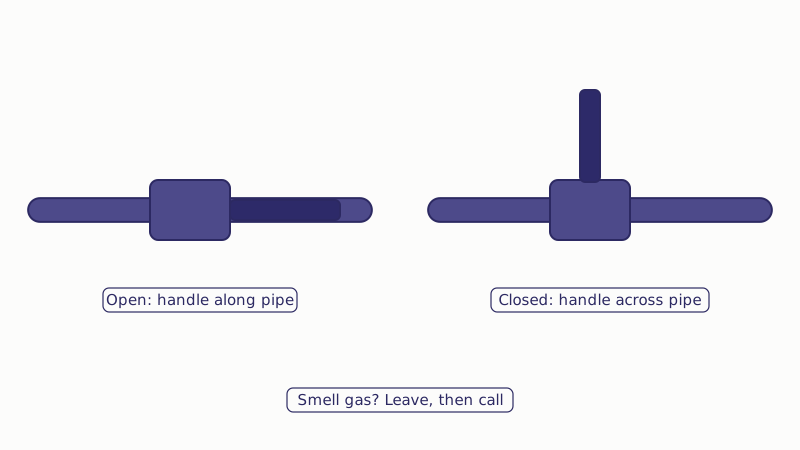
If you smell nothing, look at the heater. Is the pilot flame lit, or is the status light blinking? Is the gas control knob in the on position? Is there water or rust at the base? Has the building lost gas service? Check another gas appliance such as a stove. If it works, gas is reaching the house and the problem sits at the heater.
Never relight a pilot when you smell gas, and never relight one that you suspect has flooded the burner area. A manufacturer's help page says it plainly: do not continue if you smell gas. Our page on water heater pilot light repair gives the relight steps for when it is safe.
Why does a gas water heater lose its flame?
The common reasons are a worn thermocouple, a dirty pilot orifice, a draft or a blocked flue, sediment smothering the burner, and a failing gas control valve. The thermocouple is a small sensor that proves the pilot is lit, and when it weakens, the gas control shuts the gas off as a safety step.
Look at these in order:
| Symptom | Likely cause | Who fixes it |
|---|---|---|
| Pilot out, relights, then dies | Worn thermocouple or thermopile | Plumber, or experienced DIY on simple models |
| No flame, no spark, no status light | Ignition system or control failure | Plumber |
| Burner lit, water barely warm | Sediment, dirty burner, undersized unit | Plumber |
| Heater lights, then goes out with a draft | Blocked or backdrafting flue | Plumber, urgent |
| Gas smell | Leak or fault | Leave and call SoCalGas |
| Soot on the tank or flue | Poor combustion | Stop using it, call a plumber |
Soot, a yellow or lazy flame, or a scorched draft hood can mean poor combustion, which can produce carbon monoxide. Do not run a heater that shows those signs. See our page on thermocouple water heater replacement for the small part that fails most often.
What does the status light on my water heater mean?
On many electronic-ignition models the light flashes once a second when everything is working, and it blinks in a pattern when something is wrong. The pattern is printed on the heater's label or in the manual, and that manual overrules any website. A heater whose light never flashes may have a failed control or a lost power supply.
A manufacturer help page says to check the troubleshooting section for no status light in the owner's manual, and to call a professional when the ignition system has failed, the pilot control valve has failed, airflow is restricted, or you are not sure of the process. For brands such as Rheem and A. O. Smith, find the model number on the label and download the manual before calling. That information helps a plumber arrive with the right part.
Can I repair a gas water heater myself?
You can relight a pilot following the label and check the thermostat setting. Beyond that, gas work belongs to a plumber. California requires a contractor license for gas piping and appliance work, and the control valve, the gas line and the vent are exactly the parts where a mistake can cause a leak or carbon monoxide.
A reasonable homeowner scope is short: confirm the gas is on, set the temperature near 120 degrees Fahrenheit, relight following the label, and look for obvious leaks of water. A plumber's scope includes testing the thermocouple or thermopile, checking the burner and flue, replacing the gas control valve and testing the gas connection with a leak detector. In Los Angeles, replacing the whole heater is a different job with a permit, covered on our page for water heater replacement.
How much does it cost to repair a gas water heater?
Small parts such as a thermocouple, thermostat or ignitor commonly cost about $100 to $350 with labor, and whole-job repairs run from about $150 to $700, based on national figures published by HomeGuide. A gas control valve costs more than a thermocouple. I did not find a reliable published price for it, so ask for a quote.
The repair-versus-replace rule is simple. If the tank is sound and the heater is not old, repair. If the tank leaks, or the unit is old and has several parts failing, ask for both prices. Our cost guide for small water heater parts lists the individual parts, and water heater replacement cost covers the whole unit.
For a heater that is down right now, see emergency water heater repair. Gas line questions, like moving or extending a line, are handled on our gas line plumber page.
When should I call a plumber for a gas water heater?
Call when the pilot will not stay lit after a careful relight, when the status light does not respond, when there is soot or a scorched flue, when the burner flame looks wrong, or when you do not feel sure. Call a plumber the same day for anything that suggests carbon monoxide or a flue problem.
A local plumber comes to you after you request a quote. Give us the brand, the model number from the rating label and what you saw. Back on the home page you can browse our other services.
Common questions
How long does a gas water heater repair take?
A thermocouple or ignitor swap is usually under an hour once the plumber has the part. A gas control valve replacement takes longer, often one to two hours, because the tank may need draining and the gas connection must be tested. If the part must be ordered, expect a second visit.
What should I ask before I hire someone to repair a gas water heater?
Ask whether the plumber will test the gas connection and the flue after the repair, and whether the quote covers the part and the diagnosis. Ask for the contractor license number and check it with CSLB. Ask what they recommend if the heater is old, and get both repair and replacement prices.
Why does my gas water heater smell like gas?
Treat it as a gas leak until proven otherwise. Leave the building without using switches, call SoCalGas at 1-800-427-2200 from outside and 911 if there is danger. A faint odor from a new heater can be harmless but should be checked. Do not try to find the leak with a flame.
Does someone need to be at the property?
Yes, someone should be there to give access to the heater and approve the quote. The gas to the heater will be off during the repair, and the plumber will want to test the heater with you present. If you rent, tell the landlord, who is generally responsible for the heater.