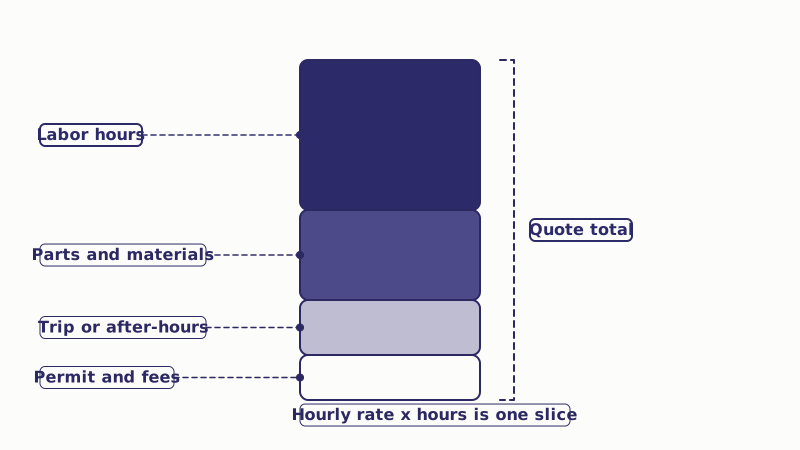
Most published guides put the average commercial plumber hourly rate near $100, with standard work commonly $100 to $150 an hour and emergency work $150 to $300 or more. Los Angeles pricing tends to sit at or above the national figures. Every number here is a guide. The plumber we arrange gives you a written quote after seeing your building. The wider picture of the work is on our commercial plumbing page.
What is the typical commercial plumber hourly rate in Los Angeles?
Commercial plumbers in Los Angeles usually charge about $100 to $150 an hour in regular business hours, according to published cost guides, and more for specialists or after-hours calls. Angi reports roughly $80 an hour for residential work and about $100 for commercial, so commercial plumbing costs a little more per hour. Treat every figure as a guide, because the sources disagree.
| Type of work | Guide range per hour |
|---|---|
| Standard commercial plumbing, business hours | $100 to $150 |
| Residential plumbing (for comparison) | about $80 to $150 |
| Emergency or after-hours commercial | $150 to $300+ |
| Master plumber, senior specialist | up to about $200 or more |
Published ranges for Los Angeles house plumbing run from the mid $80s up to about $200, and some guides report that LA sits 10 to 20 percent above the national average. Those are guides from plumbing businesses and cost sites, not official data, so use them to sanity check a quote, not to set one.
How much does a master plumber charge per hour?
A master plumber's hourly rate is usually the top of the range, up to about $200 or more in published guides, because the person has the most experience and often does the design, permit and inspection work. Many jobs do not need a master on the tools all day. A common setup is a journeyman doing most of the hours under a license holder.
In California, the contractor's C-36 Plumbing Contractor license is the legal gate. The state contractor licensing board (CSLB) requires one for plumbing work worth at least $1,000 counting labor and materials, or any job needing a building permit. Request the license number and verify it on cslb.ca.gov, whatever title the person uses.
What is a journeyman plumber hourly rate?
A journeyman plumber's billing rate is usually below a master's and sits inside the standard range above, and it is not the same as the wage the plumber takes home. Federal wage data shows how big the gap is. CareerOneStop, using Bureau of Labor Statistics figures, lists a 2024 median wage of about $31 an hour for plumbers in the Los Angeles-Long Beach-Anaheim area.
The business charging you covers more than wages: insurance, workers' compensation, the truck, tools, permits, licensing, office staff and the unproductive hours between jobs. That is why a billing rate sits well above the wage, and it does not by itself mean someone is overcharging.
What is a reasonable going rate, and how do I calculate a plumbing job?
A reasonable going rate is one that matches the sources above for your type of work, with a clear explanation of any extra. To estimate a job yourself, use a simple formula: hours on site, multiplied by the rate, plus travel or call-out fee, plus parts, plus permit fees.
For example, a three-hour drain clearing at $125 an hour with a $100 call-out fee and no parts would come to $475. A three-hour job needing a $300 part and a $150 permit would be nearer $925. Those numbers only show how the sum works. They are not a price for your job.
Many commercial plumbers quote by the job, not by the hour, once they have seen the work. A fixed price protects you from a slow day and protects the plumber from a fast one. Find out which you are being offered.
What pushes a commercial plumber's price up or down?
The hourly rate is only part of the price, because time of day, access, equipment and permits all change the total. A job on a Tuesday morning in an empty office costs less than the same job at 2 a.m. in an occupied restaurant.
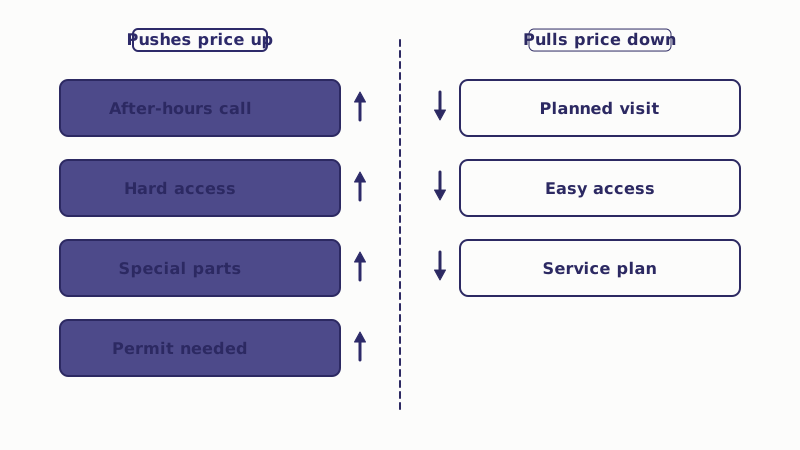
- After hours. Emergency and weekend calls often cost 1.5 to 3 times the standard rate, per Angi.
- Call-out fee. Guides show $75 to $250, often credited to the job if you go ahead.
- Access. Roofs, ceiling spaces and shafts take longer.
- Equipment. Camera inspection, hydro jetting and leak detection gear usually carry a charge.
- Permits. LADBS permits and inspections add fees and waiting time. Most plumbing work in the city needs one.
- Building type. Restaurants, medical suites and apartment buildings come with extra rules, such as grease control and backflow testing.
How do I compare commercial plumbing quotes fairly?
Compare quotes on what is included, not on the hourly rate alone. A cheap rate with a long list of extras can cost more than a higher rate with a fixed price. Ask every plumber to put the same things in writing so the numbers line up.
- The scope of work in plain words.
- Fixed price or hourly with a not-to-exceed estimate.
- Call-out or trip fee, and whether it is credited.
- Who pulls the permit and who pays the fee.
- Parts and equipment, and whether they are new.
- After-hours rates if the job runs late.
- The plumber's C-36 license number.
Be careful with a quote that is far lower than the rest. It may leave out the permit, rely on add-ons later or come from someone not holding the right license. For regular building work, a commercial maintenance plumber on a standing arrangement can smooth costs out. For a burst line at night, see emergency commercial plumber first, because the after-hours rate applies.
Residential and commercial rates also differ for reasons beyond the number, which commercial plumber vs residential plumber explains. Our home page shows how a job runs from request to quote. Commercial Residential work, such as apartment buildings, often prices like commercial, since the systems are shared.
Common questions
How is a commercial plumber's hourly rate different from a residential one?
Commercial rates usually run higher, about $100 to $150 an hour against roughly $80 to $150 for house work, because the plumber carries more insurance, handles larger equipment and works to stricter schedules and rules. Some plumbers charge the same rate for both. The difference matters most for emergency and after-hours calls.
Do commercial plumbers charge for travel time?
Many do, either as a call-out or trip fee of about $75 to $250, or by billing from the time they leave the shop. Ask in advance. Some credit the fee to the job if you go ahead with the repair. Put the answer in the written quote so the number is not a surprise.
Why do emergency commercial plumbers charge more?
Emergency work pulls a plumber off other jobs at short notice, often at night or on a weekend. Published guides show 1.5 to 3 times the standard rate, or about $150 to $300 an hour. Ask for the rate before dispatch, and confirm whether there is a minimum number of billable hours.
Is a flat fee better than an hourly rate?
Neither is always better. A flat fee suits clear jobs, such as replacing a water heater, because you know the total up front. Hourly suits unknown problems, such as tracing a leak, where nobody can say how long it takes. A fair compromise is hourly with a written estimate and a promise to ask before going over it.
Does a plumber's hourly rate include parts and permits?
Usually not. Most quotes bill labor by the hour and list parts and permit fees separately, often with a markup on parts. Ask whether the figure is labor only. A line-by-line quote shows what you are paying for and makes it easy to compare plumbers.