If you want a water softener installed in your Los Angeles home, we arrange a local plumber who comes to you, checks the main line, the drain and the power, and gives a written quote before work starts. Labor for a typical install runs about $300 to $800 in published guides, plus the unit. Everything on City of Angels Plumbing starts the same way: you ask for a quote, a plumber visits, and you decide.
What does a water softener installation plumber actually do?
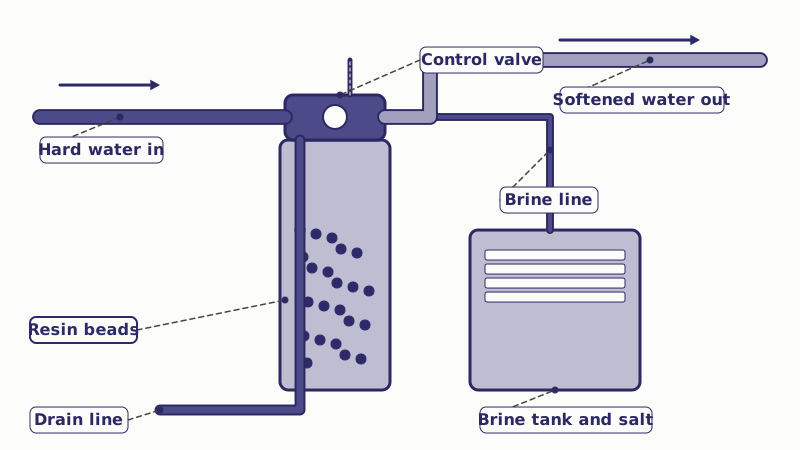
A plumber cuts into your main water line, fits the softener with a bypass valve, runs a drain line to an approved drain through an air gap, connects power, sets the control head to your water hardness and starts the first regeneration. They then pressure-test every joint. In Los Angeles the work is often done in a garage or side yard where the main enters.
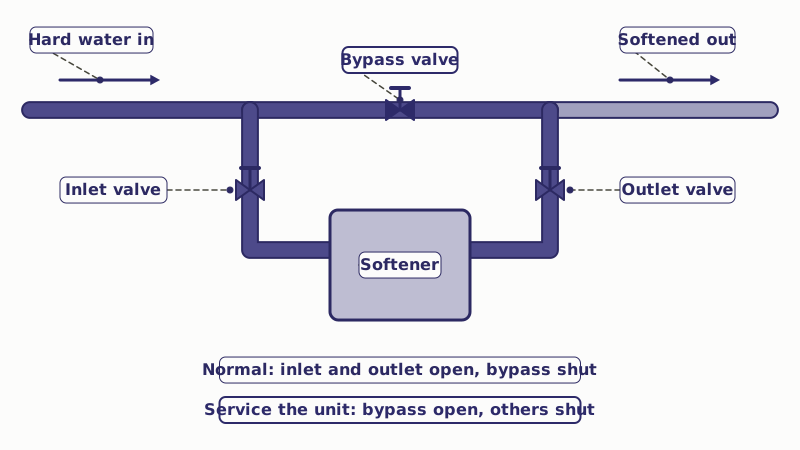
Most of the skill is in the plumbing around the unit rather than the unit itself. The plumber decides where to cut in, how to keep an untreated cold line for outdoor taps, how to reach a drain without tapping the building drain, and how to size valves so pressure stays steady. The California Plumbing Code bars a softener that causes an excessive pressure drop.
For the step-by-step version of the job, read whole-house water softener installation. If you are weighing whether to do it yourself, the DIY water softener installation guide shows where the law and the risks draw the line.
Do you need a softener in Los Angeles at all?
Not for safety. LADWP says even its hardest water does not need to be softened to be safe or usable. The reasons to install one are scale on fixtures and in your water heater, soap that will not lather, spotted glass, and clogged aerators. LADWP classes water over 7 grains per gallon as hard, and most of the city sits above that line.
LADWP's 2022 figures give a feel for the spread. San Fernando Valley and western Los Angeles averaged 8.6 grains per gallon. Silver Lake, Downtown and South Los Angeles averaged 9.8. Eastern Los Angeles and the Harbor averaged 16.3. Your own area can differ, and LADWP notes that most areas can receive any of its sources during repairs or emergencies.
LADWP also lists the downsides. Ion exchange adds sodium, and softened water is more corrosive to plumbing, which may raise lead and copper levels. If your home has older galvanized or corroded pipe, a plumber should look at it first. The removing hard water scale guide covers what you can clean without a softener.
What affects the price of a water softener installation?
Four things drive it: whether your house already has a softener loop, how far the unit sits from a drain and an outlet, the unit you choose, and whether a permit is needed. A swap on an existing loop can cost $150 to $350 in labor. A first install with new plumbing can add $500 to $2,000, according to published guides.
Those figures come from national cost guides written by plumbing and water treatment businesses, so use them as a guide, not a quote. Los Angeles labor rates may push you toward the upper end. The full breakdown, including permit fees of $50 to $150 and emergency premiums, is on the water softener installation cost page.
Licensing is part of price too. California requires a CSLB contractor license for work worth $1,000 or more, and for any work that needs a building permit. A softener install with labor and equipment commonly passes $1,000. A written quote from a plumber who can show a license number is the safe way to buy.
Which brands can you have installed: Culligan, Kinetico, Whirlpool, Aquasana?
A plumber can install any residential softener that fits your plumbing. Culligan and Kinetico are often sold through dealers who install what they sell. Whirlpool and Aquasana units are sold through retailers and online, and a plumber can set those up as labor-only jobs. The plumbing rules are the same whatever the badge.
The real differences are in how the unit works and who services it. Some systems use electricity to run a timer or a meter, others run on water pressure alone. Some dealer brands use proprietary parts, so ask who will service the unit in five years and whether a local plumber can work on it. If you bought the unit yourself, tell us so the quote covers labor and parts only.
Manuals matter. Whirlpool and other makers publish installation instructions for their own units, and a plumber follows them along with the plumbing code. Ask the plumber to leave the manual, the bypass instructions and any warranty paperwork with you.
What about a softener loop, a shower-head softener or a home system?
A softener loop is plumbing built ahead of time, with a bypass and connections, so a unit can be swapped in quickly. If you do not have one, the plumber builds it as part of the job. A shower-head softener is a small filter cartridge, not a true water softener, so it is not a plumbing job, and it treats only that shower.
Home water softener systems fall into two families. A salt-based softener uses ion exchange and swaps calcium and magnesium for sodium. A salt-free conditioner, often template-assisted crystallization, changes how minerals behave without removing them. Wikipedia's water softening article describes both and notes that deposits can still form where water evaporates.
If you live where salt-based units are restricted, the salt-free route can be the compliant one. The City of Los Angeles itself shows no such rule that we found, but the Santa Clarita Valley does restrict them, and other districts may. Ask before you buy.
What are the signs you need a water softener?
Crusty white buildup on faucets and showerheads, spotted dishes and glass, stiff laundry, soap that will not lather, a water heater that rumbles, and appliances that clog with mineral are the usual signs. Any of these in a Los Angeles home points to hard water, and a few of them together point to a softener or conditioner as a fix.
A water test confirms it. Your LADWP service area report gives a hardness figure, and a home test kit or a plumber's meter reading gives the number at your tap. Compare it with the 7 grains per gallon LADWP uses as its line for hard.
A softener will not fix low pressure or high bills that come from other causes. If your water bill has jumped, check why your water bill is so high first. Scale and a leak are different problems and need different answers.
Common questions
How long does water softener installation take?
A swap on an existing loop takes one to two hours. A first-time install with a new drain, outlet and loop can take most of a day. Older homes with corroded pipe near the main can take longer. The plumber should give you an expected duration in the written quote, and tell you if the pipes change the plan.
What should I ask before I hire someone to install a water softener?
Ask for a CSLB license number and check it at cslb.ca.gov. Ask whether a permit is included and who pulls it. Ask for a written quote with the unit, labor, drain work and first salt fill listed separately. Ask who services the unit later, and what happens if the pipes behind the wall are worse than expected.
Does someone need to be at the property?
Plan to be there at the start and at the end. The plumber needs access to the main, the water goes off for part of the job, and you should see the bypass valve and the control settings explained. Pets and vehicles should be kept clear of the work area.
Does a water softener need a permit in Los Angeles?
Contractor sources in Los Angeles say LADBS requires a plumbing permit when the softener ties into the main water line. We could not confirm that on an official page, so ask LADBS or the plumber to confirm before work starts. A plumber who pulls the permit also books the inspection.
Can a softener run up my water bill?
A softener uses extra water each time it regenerates, which is usually a small amount. A sudden jump after installation more often points to a stuck valve or a leak. Check the drain line and the control head, and ask the plumber to inspect it if the meter keeps moving when nothing is running.