A commercial maintenance plumber looks after your building's plumbing on a schedule, so small faults get fixed before they become floods. A visit typically covers drains, water heaters, valves, backflow assemblies and grease control. Planned work is cheaper than a night-time call-out, which published guides price at 1.5 to 3 times the normal rate. This page is part of our commercial plumbing guide.
What does a commercial plumbing maintenance visit include?
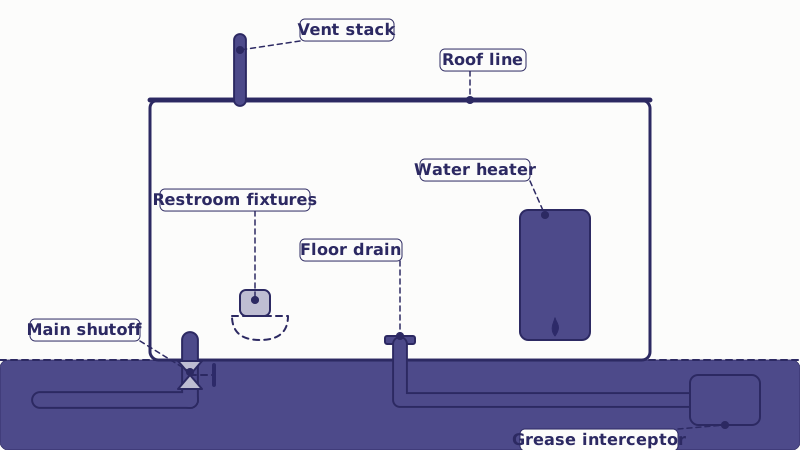
A maintenance visit is a planned inspection and servicing of the systems that keep a building running. The plumber checks, tests and cleans, then reports what needs attention and what can wait. A typical visit covers the items below, but your building decides the list.
- Drains and floor drains: flushing, checking for slow flow, clearing buildup before it blocks.
- Water heaters and boilers: checking for leaks, corrosion, the relief valve and flushing sediment.
- Valves: exercising main and zone shutoffs so they close when you need them.
- Restroom fixtures: toilets, urinals, faucets, flush valves and supply lines.
- Backflow assemblies: testing and recording results.
- Grease interceptors in food businesses: inspection, cleaning schedule and records.
- Leak signs: stains, damp, mineral deposits and sounds in pipes.
The plumber should write down findings and photos so you have a record for owners, insurers and inspectors.
How often should a commercial building have plumbing maintenance?
Most buildings suit a visit once or twice a year, with some items on their own schedule. Backflow assemblies are tested annually under LADWP and California rules. Kitchens with heavy grease use may need much more frequent drain and interceptor service. A low-use office may need less.
A sensible pattern is:
| Item | Typical timing |
|---|---|
| Backflow assembly test | Every year |
| Grease interceptor cleaning | As the interceptor and LA Sanitation rules require, often monthly or quarterly |
| Water heater check and flush | Once a year |
| Drain jetting in restaurants | Quarterly to twice a year, depending on use |
| Valve exercise and fixture check | Once a year |
These intervals are common practice, not legal rules, except where the water provider or LA Sanitation sets them. Ask the plumber to set a schedule for your building after the first visit.
What does a plumbing maintenance plan cost?
Maintenance is billed either by the visit or as a yearly plan, and the price depends on building size and what is included. Commercial plumbing guides put standard hourly rates near $100 to $150, so a two-hour inspection with a basic report might fall in the few hundred dollar range, plus any parts. That is an illustration only. You get a written quote after the plumber sees the building.
The better comparison is with the cost of waiting. Emergency and after-hours calls run roughly $150 to $300 an hour or more, according to published guides, before damage to stock, floors and ceilings. A plan also lets you budget for replacements, such as a water heater at the end of its life, before it fails on a Saturday night.
What should I check myself between visits?
Staff can catch plumbing problems early with a short walk-through between professional visits. You do not need tools or training. You need to know where the shutoffs are, look in the same places each week and notice when something changes, such as a stain, a smell or a sound.
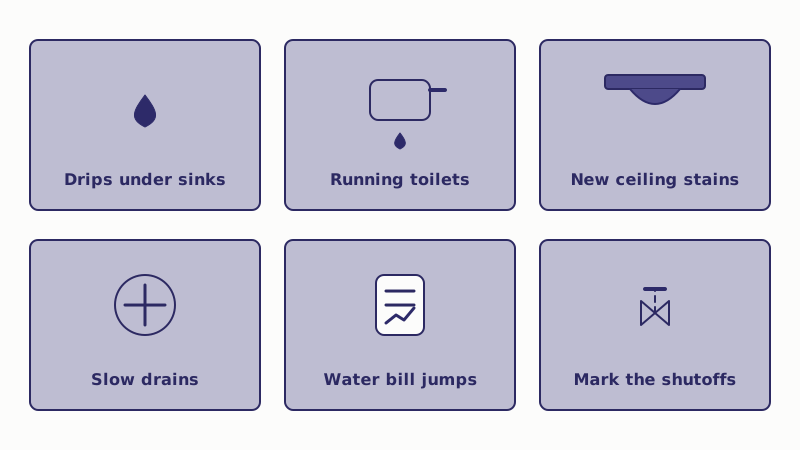
- Know where the main water shutoff and zone valves are, and mark them.
- Look under sinks and around water heaters for drips, rust or damp.
- Listen for running toilets and banging pipes.
- Watch ceilings below restrooms for new stains.
- Note slow drains and sewer smells, and report them the same day.
- Check the water bill each month for a sudden rise.
Never treat a gas smell as routine. Leave the building, call SoCalGas at 1-800-427-2200 from outside and call 911 if there is danger.
Do maintenance and repair jobs need a permit in Los Angeles?
Routine maintenance does not. Testing a valve, flushing a water heater, clearing a drain or replacing a washer typically needs no permit. Replacing a water heater, adding or moving fixtures or changing pipework usually does, since LADBS requires permits for most plumbing work in the City of Los Angeles.
The contractor of record pulls the permit. Ask the plumber to flag during a maintenance visit anything that will need a permit, so you can plan the time and cost.
What does a restaurant or apartment building need most?
Restaurants need grease control and drain maintenance most, and apartment buildings need valve and shared-line attention. LA Sanitation's Fats, Oils and Grease program requires approved grease removal devices for food service establishments, and the program describes kitchen best management practices. Keep service records for inspectors.
Apartment buildings, which are Commercial Residential property, depend on shared stacks and larger water heaters. A blocked stack or failed riser valve affects many tenants, so exercising valves and clearing main lines each year is worth the cost. If you manage one, see commercial plumber vs residential plumber for who to call, and read about backflow testing in Los Angeles.
Start from the home page if you are new here. For the hourly picture, see commercial plumber hourly cost. If something has already gone wrong, read emergency commercial plumber.
Common questions
What is a commercial maintenance plumber?
A commercial maintenance plumber is a plumber who services a business or multi-unit building on a regular schedule, not only when something breaks. They inspect, test and clean drains, water heaters, valves, backflow assemblies and grease control, and they report what needs repair. The goal is to find faults while they are small and cheap.
How much does preventive plumbing save?
Nobody can promise a figure, because it depends on the building. The comparison is simple: planned work at a standard hourly rate, about $100 to $150 in published guides, against emergency work at $150 to $300 or more an hour plus water damage. One avoided flood can pay for several years of visits.
Do I need a contract for plumbing maintenance?
Not always. Some owners pay per visit, others sign a yearly plan with set visits. A plan makes sense for restaurants, large offices and apartment buildings. Read any contract for what is covered, the visit schedule, call-out terms and cancellation, and ask for the C-36 license number of the plumber doing the work.
Does maintenance include backflow testing?
It can, but only if the plumber or a separate tester holds the required backflow certification. LADWP Rule 16-D and California rules call for annual testing of assemblies on the water service, with results recorded. Ask whether the plan includes the test and the paperwork, or whether it is billed separately.
Who is responsible for plumbing in a leased commercial space?
It depends on the lease. Usually the tenant handles fixtures inside the unit, and the landlord handles the main lines and shared systems, but leases vary. Read yours or ask the property manager before calling a plumber, so the bill goes to the right party. We can arrange a visit once you know who approves it.