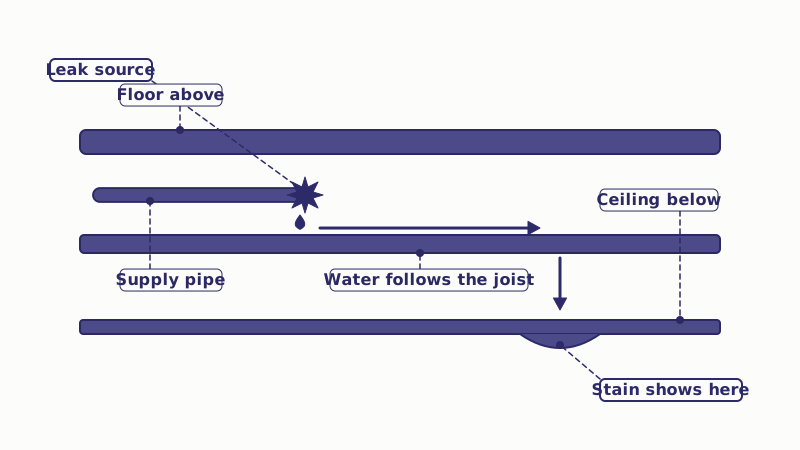
If water is coming through a ceiling, stop the source first: shut off the water at the main if you think it is a pipe, move belongings out from under it, put a bucket below, and keep clear if the ceiling sags. Then find where it comes from, dry everything within 48 hours and call a plumber for a pipe or drain. Our leaks and burst pipes hub covers related problems, and the home page shows how we arrange a visit.
What should I do when water leaks through the ceiling?
Shut off the water at the main valve if a pipe could be the cause, then move furniture and electronics out of the way. Place a bucket or tub under the drip, and stay out from under a bulging or sagging ceiling. If water is near a light fixture or fan, keep the switch off and, only if you can reach the panel on dry ground, turn off that circuit at the breaker.
Order of steps that works for most homes:
- Shut the water at the main. If the leak slows or stops within a few minutes, it is a supply or drain pipe, not rain.
- Protect what is below: move furniture, lift rugs, cover what cannot move with plastic.
- Catch the water. A bucket under a drip, a tub under a stream.
- Photograph the stain, the drip and the area before you touch anything.
- Keep people away from a ceiling that is bulging, sagging or cracked in a ring. Wet drywall is heavy and can come down.
- Call a plumber if the water is from a pipe or a drain. Call a roofer if it only happens in rain.
Do not poke around a wet light fixture. Water and a live circuit in the same place is a reason to stop and call an electrician.
How do I find out where a ceiling leak is coming from?
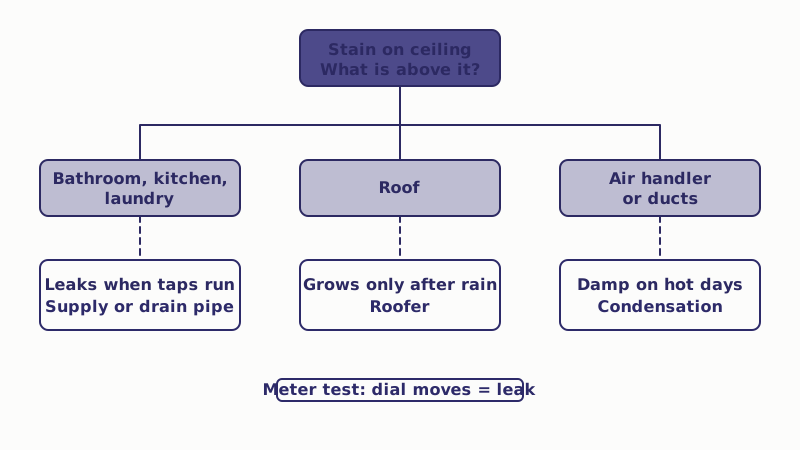
Look at what sits above the stain: a bathroom, a kitchen, a laundry room, a water heater, a roof or an air handler. Then match the pattern. A leak that runs with the taps in use points to a supply or drain pipe. A leak only in rain points to the roof. A damp patch on a hot day points to condensation from ducts.
Quick tests you can do:
- Meter test. Shut off all water, then check the leak detection gauge on the LADWP meter. If it moves, a pipe is leaking. EPA WaterSense gives a longer version: read the meter, wait two hours with no water use, read it again.
- Fixture test. Run only the shower, then only the toilet, then only the sink upstairs and watch the ceiling. If the drip starts when one runs, you have your source.
- Rain test. If the stain grows after rain and not otherwise, ask a roofer.
- Timing. Hot-line leaks may come with a warm patch. A drain leak comes when something drains.
Common signs of a leak above the ceiling are a brown or yellow stain with darker edges, a stain that grows, peeling paint, a musty smell, bubbling or sagging drywall, and sounds of dripping. A small stain that never changes may be old, which our page on water spots on the ceiling with no leak covers.
Is it a burst pipe if water is coming through the ceiling?
It can be. A burst pipe in the ceiling or in a wall above sends a steady flow, often with a hissing sound, and the water does not stop until the main is shut. A drip that comes and goes is more likely a joint, a drain or a fixture. When in doubt, shut the main and let a plumber confirm.
If the pipe burst, the house can flood fast, and a ceiling may collapse under the weight of pooled water. Open a ceiling stain or bulge only if a plumber tells you to, and stay out from under it. Our burst water pipe page lists the first ten minutes, and the guide on how to know if a pipe burst covers the signs.
A burst pipe repair usually means opening the ceiling or wall, cutting out the failed section, fitting new pipe, testing it and then repairing drywall and paint. Repair time depends on access. A pipe above an open attic hatch takes less time than one behind finished walls.
How do I dry a ceiling after a water leak?
Dry the area within 24 to 48 hours. The US EPA says that is the window in which mold in most cases will not grow on wet materials. Remove standing water, open windows or use fans and a dehumidifier, and expect to cut out and replace wet drywall or ceiling tile and soaked insulation if they stay wet past 48 hours.
A wet ceiling is hard to dry in place, because the water sits in the insulation above and in the cavity. A plumber stops the leak, and a drying or restoration company can open and dry the cavity, and tell you whether the drywall can stay. Take moisture readings before paint goes on.
Do not paint over a wet or stained ceiling. A stain-blocking primer on damp drywall hides the problem and can peel. Paint only once the material is dry and the source is fixed.
What about mold on a ceiling after a leak?
Mold can appear on a wet ceiling if it stays damp. The EPA says a mold patch under about 10 square feet is often something a homeowner can clean following its guidelines, and larger areas, or a lot of water damage, call for a contractor with mold cleanup experience. Porous ceiling tile and drywall that mold has grown into often have to be thrown away.
Do not paint or caulk over mold. Clean and dry the surface first, and fix the source, or the mold returns. Hidden mold can form above the ceiling, where you cannot see it, so a ceiling that stayed wet for days deserves a look from above. If someone in the home has breathing problems or the mold is widespread, talk to a doctor and a mold professional, not a plumber.
If the water came from a sewer or a drain, not a clean supply line, the EPA says to call a professional rather than dry it yourself.
What if the leak is in an apartment, a basement ceiling or the bathroom above?
In an apartment, tell your landlord or manager at once, in writing, with photos and the date. A leak from the unit above is often the building's or the upstairs neighbor's issue, and the manager decides who sends a plumber. A basement ceiling leak usually points to the bathroom or kitchen above, or to a supply pipe running in the joists.
For a leak below a bathroom, the usual suspects are the shower pan or tub drain, the toilet seal and a supply line. Run each fixture in turn to see which one makes the ceiling drip. Bathroom leaks are slow and constant, and they stain before they drip, so the stain is often the first sign.
If you rent, do not open the ceiling yourself without the landlord's okay. Photograph and report, and let the plumber and the building decide who pays for what. Our page on whether insurance covers a burst pipe explains the usual split.
When should I call a plumber for a ceiling leak?
Call a plumber when the leak follows water use, when the meter moves with everything off, or when you cannot find the source. Call right away if water is pouring or the ceiling is sagging. A roofer is the right first call if the leak only shows in rain. We'll arrange a local plumber to visit through the quote page.
Expect the plumber to start with the source: check the fixtures above, test the lines, and open the ceiling only where needed. Ask for a written quote that lists the pipe repair, any access hole, and who repairs drywall and paint afterward. Often that last part is a separate trade.
Common questions
How long does it take to fix a ceiling water leak or a burst pipe?
Finding and stopping the leak is often the work of a few hours when the pipe is reachable. A burst in a wall or ceiling takes longer, because the plumber opens the surface, replaces the pipe, tests it, and then drywall, texture and paint follow in other visits. Drying alone can take days. Ask for a timeline in writing.
What should I ask before I hire someone to fix a ceiling leak?
Ask whether the quote covers locating the source, the pipe repair, an access hole and a pressure test, and who repairs drywall and paint afterward. Check the CSLB record at cslb.ca.gov. Have the cause and the repair written on the invoice. California limits a deposit to $1,000 or 10 percent of the price, whichever is lower.
Does someone need to be at the property?
Yes, plan to be there or send someone you trust. The plumber needs the room under the stain, the room above it, the main valve and sometimes the attic. You will want to hear the finding before approving a repair. Renters should tell the landlord about the visit.
Is a small water leak in the ceiling urgent?
A small leak is less urgent than a flood, but it is not safe to ignore. Water keeps soaking insulation and drywall, and the EPA says materials should be dry within 24 to 48 hours. Turn off the water if you suspect a pipe, take photos, and call a plumber soon. A small stain can still be a pipe failing slowly.
Can I fix a ceiling leak myself?
You can stop the water, catch the drip and dry the area. You can patch drywall after a plumber has fixed the source. Replacing pipe in the ceiling, working near wiring, or cutting into a wall are jobs for a plumber. A cosmetic patch over an active leak just hides it. Fix the source before you touch the surface.