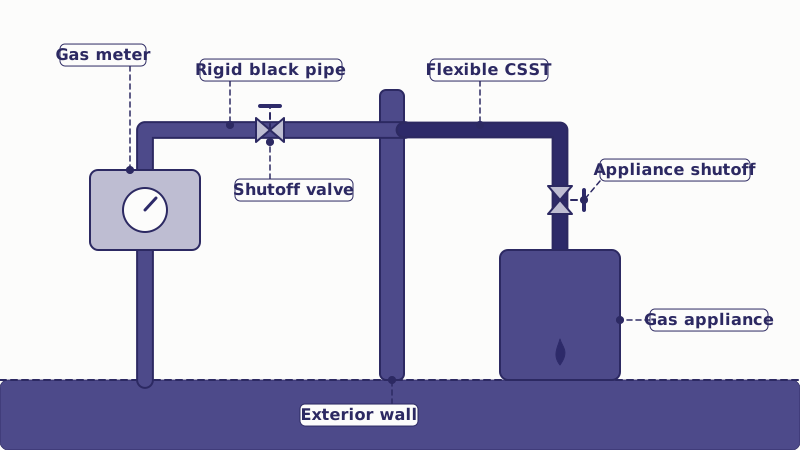
A "1/2 inch flexible natural gas line" is either a short flexible appliance connector that links a stove, dryer or water heater to a fixed gas pipe, or a corrugated stainless steel tubing (CSST) run that carries gas through the building. Connectors are for the last few feet only. CSST is a piping system that must be installed by a qualified installer to the manufacturer's rules and local code. This page sits in our wider coverage of gas lines.
If you smell gas, leave the building, and once you are outdoors phone SoCalGas at 1-800-427-2200. Call 911 if there is danger. Do not switch anything on or off.
What is a flexible natural gas line, and which type do you have?
There are two. A flexible appliance connector is a coated brass or stainless steel hose, a few feet long, with a fitting at each end. CSST is a long stainless steel tube with a corrugated wall, usually in a yellow or black plastic sleeve, that runs inside walls, attics and crawl spaces. They look alike at a glance, but a connector is not CSST and the two cannot substitute for each other.
The 1/2 inch size means different things. Appliance connectors are sold by nominal size, and 1/2 inch is common for stoves, dryers and many water heaters. CSST is sized by a manufacturer's flow rating, the equivalent hydraulic diameter, so a "1/2 inch" run is not interchangeable with a half-inch steel pipe. The installer sizes it from the manufacturer's tables for the length and the connected appliances.
Check the label. A connector carries a listing mark, and one for exterior use is marked as such. Using an indoor connector outdoors, or reusing an old connector after moving an appliance, is a common mistake. Replace the connector when you replace or move the appliance.
What type of pipe is used for natural gas lines in a home?
Under the California Plumbing Code as summarized in city handouts, gas piping in a house is Schedule 40 black or galvanized steel (wrought iron or steel), CSST, and, for buried exterior lines, approved polyethylene pipe. Cast iron is not permitted for fuel gas. Each material has its own fittings, supports and testing rules, and the local building department decides what it accepts.
Black steel pipe is the long-standing standard in Los Angeles homes, with threaded fittings, and is what you will find in many houses built before CSST. CSST is quicker to run through finished walls, which is why it is common in remodels and newer construction. Polyethylene is used only underground and connects to steel above grade through listed transitions.
The table gives the usual picture.
| Material | Typical use | Notes |
|---|---|---|
| Black steel pipe | Main runs inside and outside above ground | Threaded, long-standing standard |
| CSST | Runs through walls, attics, crawlspaces | Listed, installed per manufacturer, bonded |
| Polyethylene | Buried exterior runs | Approved types only, transitions listed |
| Flexible appliance connector | Final connection to an appliance | Short, listed, not for runs through walls |
Some mobile home weatherization programs forbid copper gas lines. Ask the building department before assuming any material is allowed.
What does the code say about exterior gas lines and burial depth?
Exterior gas lines must be protected from damage and corrosion, and buried pipe needs a minimum cover of soil. City handouts quoting the California Plumbing Code give 12 inches for steel and 18 inches for plastic, and some give 18 inches for metal. The figures differ between code editions and jurisdictions, so the Los Angeles inspector's reading governs, and a plumber confirms it before digging.
Other rules for buried gas pipe include: ferrous piping is electrically isolated from the rest of the system with listed fittings above ground, the pipe is protected against corrosion, and the trench is backfilled so nothing sharp rests on the pipe. Exterior runs also need a pressure test and an inspection before they are covered.
Never dig where you are unsure of utilities. California law requires you to contact 811 before digging, and a gas line nick can be dangerous. Do not run your own buried gas line, as explained below.
What are the rules for a mobile home gas line?
Mobile and manufactured homes follow state housing rules, Title 25 in California, in addition to local rules. HCD guidance says the connector between the lot's gas riser and the home must be a single flexible connector listed for exterior and mobilehome use, not buried and not over 6 feet long. Underground lot piping needs at least 18 inches of cover. Do not leave a home sitting over underground gas piping unless it is in gas-tight sleeves.
A permit from the enforcing agency is needed to install or change gas equipment. In mobilehome parks, the park operator and HCD handle some work, so ask the park before you hire. Gas piping to appliances in a home is low-pressure tested before it is connected. Some weatherization programs do not allow copper gas lines, and require a new listed connector rather than reusing an old one.
Is it legal to install a gas line yourself in Los Angeles?
No for most people. Within the City of Los Angeles, anyone installing or modifying fuel gas piping needs an LADBS plumbing permit and an inspection, and a California contractor must do the work with a C-36 plumbing license from the CSLB, or an HVAC contractor within the scope of their license. Limited owner-builder cases still need permits and inspections.
This is a safety rule, not a formality. A bad joint or an unbonded CSST line can leak or fail, and gas line repair is held to the same rules. The permit process includes a pressure test, and SoCalGas will not turn on service without proof of a passed local inspection. CSST manufacturers also require installers to complete product training. Do not attempt to run, extend or connect gas pipe yourself. Do change nothing beyond the appliance connection unless you are qualified.
Replacing a flexible appliance connector for the same appliance is simple, but turn the gas off at the appliance valve, check for leaks with soapy water and call the utility or a plumber if anything bubbles or smells. If you are unsure, do not touch it. Gas Line Installation of any new run, as opposed to swapping a connector, is contractor work. For help finding the right person, read about gas plumbers and the C-36 license.
Does CSST need bonding, and what is the earthquake valve?
CSST must be bonded to the building's electrical grounding system, which model codes and manufacturers require. The bonding wire goes to a metal pipe or fitting, never to the tubing, and is done by a qualified installer. Separately, Los Angeles requires a seismic gas shutoff valve in some situations, for example when a building is sold or permitted work reaches $10,000.
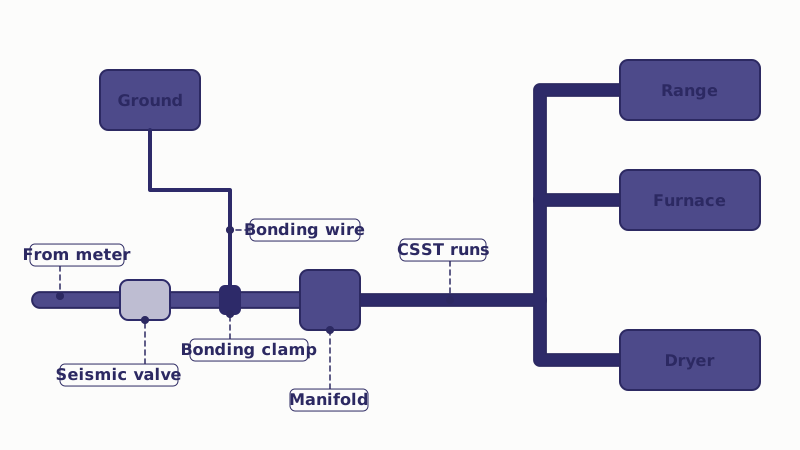
The valve closes automatically in a strong earthquake. Our page on the earthquake gas shutoff valve covers when one is required and what to do after it trips. For costs of gas work, see the cost of a plumber gas line job.
To have a gas line checked, extended or replaced, request a written quote and a local plumber will be arranged to visit you. More on the topic is on our gas line page.
Common questions
Who installs gas lines in a home?
A California contractor with a C-36 plumbing license from the CSLB, or an HVAC contractor working within their license, installs gas lines, under an LADBS plumbing permit in Los Angeles. The utility, SoCalGas, handles the line up to the meter. Work after the meter is the contractor's, and needs an inspection before service is restored.
Can I use a 1/2 inch flexible gas line behind a wall?
Only if it is CSST installed by a trained installer to the manufacturer's rules and local code. A flexible appliance connector is not allowed to run through a wall or be concealed. When in doubt, the building inspector decides, so have a C-36 contractor confirm before the wall is closed.
What type of pipe is used for natural gas?
Black or galvanized steel pipe, CSST and, for buried exterior lines, approved polyethylene. Cast iron is not allowed for gas. Which one is used depends on the route, the appliances and what the building department accepts. A plumber chooses and sizes it from the code tables.
How deep must a residential gas line be buried?
City handouts based on the California Plumbing Code give about 12 inches of cover for steel and 18 inches for plastic, though some cite 18 inches for metal as well. Mobile home lot piping needs 18 inches. Because editions differ, confirm with the Los Angeles inspector before digging.
How often should flexible appliance connectors be replaced?
Replace one whenever you replace or move the appliance, and when it is corroded, kinked, cracked or damaged. We could not find a single fixed replacement interval in the sources we checked, so follow the connector's label and the plumber's advice, and never reuse an old connector on a new appliance.