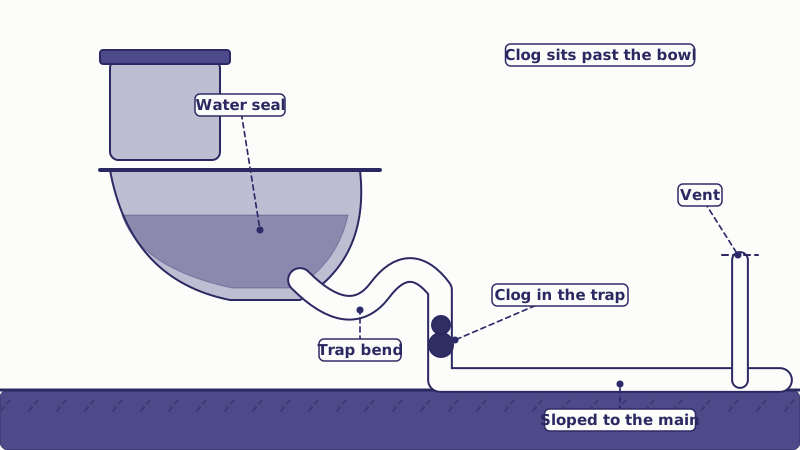
If a toilet will not flush down and the plunger has not worked, call a plumber. A local plumber visits your Los Angeles home, works out whether the blockage sits in the toilet or deeper in the line, and clears it. We set up the visit, and the quote reaches you in writing before the job begins. Plumbing Drain Cleaning covers the whole range, from a closet auger on one toilet to a camera and a jetter on the main line. This page is the starting point for every drain and clog question we answer, while the home page covers everything else we line up.
Do plumbers unclog toilets?
Yes. Clearing a clogged toilet is routine plumber work. A plumber uses a toilet plunger and a closet auger first, a cable machine if the blockage is deeper, and pulls the toilet only when something solid is stuck in the trap. Most visits for a toilet-only clog land around $110 to $275 nationally, and our cost guide breaks that down.
You can see how the visit goes in how a job runs. Ask for the quote on our quote page and a local plumber gets back to you with a price. If the clog came back after you cleared it yourself, say so, because a repeat clog often means the problem sits past the toilet.
When should you call a plumber for a clogged toilet?
Call when plunging and a closet auger have not cleared it, when the water in the bowl keeps rising, or when the shower, tub or a sink gurgles or backs up as well. Several slow drains at once point to the main line. If sewage rises from a floor drain or the tub, phone right away.
Other signs worth a call: a toilet that clogs every few days, a smell of sewage that stays after you flush, wet flooring around the base, or something hard dropped in the bowl. A hard object will not move with plunging, and forcing it can jam it deeper. Inside Los Angeles city limits, sewer overflows and odors go to LA Sanitation, which staffs a round-the-clock number, 1-800-773-2489.
Will letting a clogged toilet sit unclog it?
Only if the blockage is plain toilet paper that can soften and break up in the water. Most clogs do not clear on their own, because waste and paper settle and pack tighter. If the bowl is not full, waiting 30 to 60 minutes before plunging does no harm, and sometimes the level drops.
Do not flush again to test it. A second flush adds water to a full bowl and is a common way to cause an overflow. If the level is high, lift out some water with a cup first. Plumbers' own advice is consistent here: wait a short time, plunge, and call if an hour of effort has not moved it.
What happens if you leave a toilet clogged for 3 days?
The clog usually gets harder to clear, the bowl water sits and smells, and any use of the plumbing can push waste back up. A toilet blocked for days can overflow without anyone flushing it, if other water, such as a washing machine, runs into the same line. Bacteria in that water makes the mess a cleanup problem, not only a plumbing one.
If you have no second toilet, plan a fix the same day. If the toilet is part of a main-line blockage, the backup can surface at the lowest fixture of the home, frequently a tub or floor drain. Leave the washing machine and dishwasher off until the line is clear, and send kids and pets out of the bathroom.
How do you repair a clogged toilet yourself first?
Use a flange or toilet plunger with a bowl-shaped cup, keep the cup covered by water, and push and pull with steady strokes for about a minute. If that fails, a closet auger gets to the trap bend and may spare you a service call. Stop when a toilet bowl will not drain or the clog is a solid object, and call a plumber.
The cheaper steps, in order:
- Put on gloves, lay towels and lower the bowl water if it is brimming.
- Plunge with a seal on the hole. A flat kitchen plunger does not seal well in a toilet.
- Add hot water (not boiling) mixed with some dish soap, then give it time.
- Use a closet auger, turning the handle gently, not forcing.
- Do not use a chemical drain opener in a toilet. The Drano label for its gel says not to plunge after using it, because splashback is caustic.
Our guide on how to repair a blocked toilet walks through each step with the mistakes to avoid. If the toilet is running rather than clogged, see toilet repair and what to do when a toilet keeps running.
What causes a clogged drainage system?
Most household clogs come from too much going down the drain: hair, soap scum, grease, food, wipes, paper towels and flushed products. In the pipes themselves, roots, scale, sagging or cracked lines and poor slope hold waste in place. By LA Sanitation's account, more than half of all sewer backups trace to tree roots and poured-out cooking fats.
Los Angeles adds its own causes:
- Older pipe. Houses from the early and middle 1900s can still have original drain pipe, which roughens with age. See galvanized pipe replacement if your supply lines are the same age.
- Hard water. LADWP puts average hardness at 8.6 grains per gallon across the San Fernando Valley and the west side, 9.8 near Silver Lake, downtown and South LA, and 16.3 across the east side and the Harbor area. Minerals can leave scale on fixtures and combine with soap into scum.
- Low-flush toilets. State rules cap new toilets at 1.28 gallons for each flush, so heavy paper use or a partial flush leaves less water to carry waste.
- Roots. Mature trees near a private sewer lateral can invade joints.
Can conditioner clog a drain?
Not by itself in a normal amount rinsed with plenty of water. Conditioner leaves a film that hair and soap scum cling to, so it contributes to buildup in a shower drain over months. The clog is mostly hair, held together by that film. A drain strainer and a periodic hair pull do more than changing products.
Plumbers see the same pattern in most showers: a wad of hair sitting just under the grate, bound with soap residue. If your shower drain is slow, go to how to unclog a drain in the shower, and if the drain also smells, shower drain cleaner for smell.
What is the best homemade drain cleaner?
There is no homemade mix that beats pulling the clog out. Baking soda and vinegar react with each other, not with hair or grease, and leave a mild salty solution. A hot water flush with dish soap can help a grease film, and a hair hook or a cut-down plastic strip pulls hair. Boiling water can damage some pipes and fixtures, so use hot, not boiling.
For a kitchen sink, hot water and soap handle light grease. For a bathtub or shower, a drain hook is the cheapest tool that works. Read our guides on slow drains in a kitchen sink, unclogging a kitchen sink, and clearing a clogged tub, and on bathroom sinks clogged with hair.
Where does each kind of drain problem go next?
Each fixture has its own page, because the cause, the cheap fix and the right drain cleaning method differ. If the clog is in an appliance drain, go to the washing machine drain or the dishwasher drain. A disposal that backs up is covered in how to unclog a garbage disposal drain. For pricing a sink clog, see what a plumber charges to unclog a sink.
If the smell is the problem, not the clog, the page on removing sewer smell from a house. If the drain problem is part of a leak, the leak plumber page is the better starting point, and a burst or flooding situation is emergency plumber territory.
What about a running toilet, a mobile home or new construction?
A running toilet is a repair, not a clog, and has its own page, toilet repair. A mobile or manufactured home toilet clears the same way, using a plunger then an auger. Work that touches pipes under the floor, or changes to the drain layout, is for a plumber. For a new build, plan the toilet drain at the rough-in stage with a plumber.
We have not verified manufactured-home plumbing rules for this page, so we do not state them. For layout and rough-in on a new house or addition, our new construction plumbing page is the place to start. Any change needing a permit must follow rules set by the Los Angeles Department of Building and Safety, and state law calls for a contractor license on permitted work and on any job worth $1,000 or above.
Does hydro jetting clear drains better than a cable?
Sometimes. Hydro jetting blasts a line with pressurized water, which fits grease, scale and roots where a cable merely punches a channel. It costs more, with main line jobs typically quoted around $350 to $600, and it is not right for fragile pipe. A plumber who offers it in Los Angeles should look at the pipe first, often with a camera.
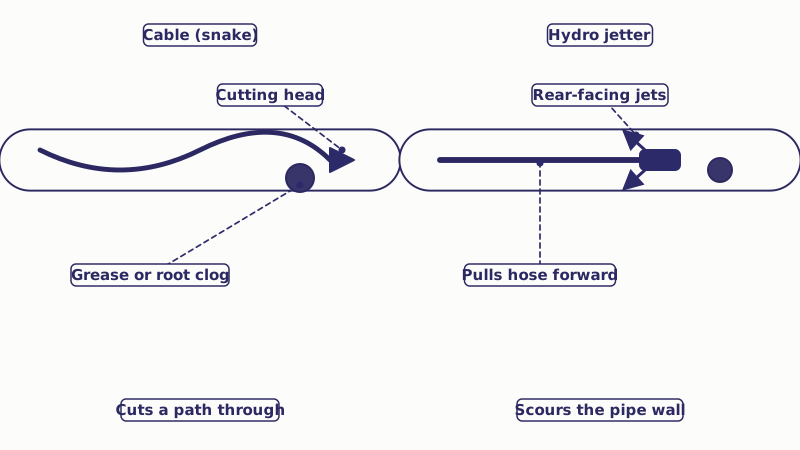
Jetting is a plumber's tool and not a toilet clog fix. The cost guide has prices, plus questions to raise before you accept a camera or a jetter.
Common questions
Is Drano safe for shower drains?
Drano markets its gel for bathroom drains, and the label directs you to pour it slowly, wait, and flush with hot, not boiling, water. It contains sodium hydroxide and bleach, causes burns on contact, and must never be mixed with other cleaners. Do not plunge after using it. Plumbers often prefer a drain hook, because chemicals do not remove hair clumps reliably.
Is there anything I can pour down my shower drain to unclog it?
Warm tap water plus a little dish soap can loosen soap film, and a shower-drain product can help when used per its label. Hair is the usual culprit, and liquids do not remove it. Take out the strainer, then hook the hair free. Never mix products. After chemical exposure, ring Poison Control on 1-800-222-1222.
Does Dawn really unclog drains?
Dawn and other dish soaps can help with grease, and with a toilet clog when poured in with hot water, because the soap lubricates the blockage. They do little against a hair clog or a solid object. Many plumbers suggest it as a first low-cost try, then a plunger or an auger. If the water level does not fall within an hour, move on.
What is the best way to unclog a shower drain?
Lift the strainer off, draw the hair out using a hook or a strip of plastic, and rinse with hot water. Should water still stand, use a plunger with the overflow covered, then a small hand auger. Our shower drain guide gives the steps. If several drains slow down at once, call a plumber.
What will dissolve hair in a drain?
Harsh openers with lye or bleach can dissolve hair, since hair is protein, but they work unevenly and carry burn risks. Enzyme products act slowly and suit upkeep, not a full clog. The reliable fix is to remove the hair by hand with a hook, then keep a strainer on the drain to stop it forming again.