New construction plumbing is the installation of a building's water supply, drains, vents and gas piping while the structure is still open, followed by fixtures at the end. In Los Angeles it is permitted through LADBS and inspected at stages. Published guides put the plumbing for a new house at roughly $4 to $8 per square foot. We arrange a local plumber who comes to your site and quotes in writing. The wider picture is on the plumber home page.
What does new construction plumbing mean for your project?
It means plumbing installed in a new building, an addition or an accessory dwelling unit, in phases that follow the framing. The plumber lays drains and water lines, tests them, passes inspection and sets fixtures at the end. Because walls and floors are open, it costs less per fixture than retrofitting.
It applies to a new house, a rebuild after a teardown, a room addition with a bath, a garage conversion or a backyard unit. In each case the pipes have to be planned with the layout, since drain slope, vent paths and shutoff locations are hard to change once concrete is poured or walls are closed.
Planning with the plumber early saves money. A plan that puts bathrooms and the kitchen back to back, near the water heater, shortens pipe runs and lowers cost.
What are the stages of new construction plumbing?
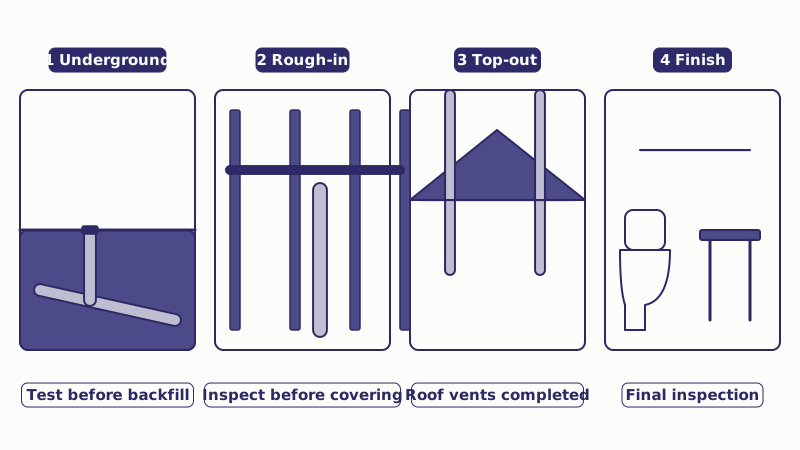
There are four main stages: underground, rough-in, top-out and finish. Underground piping goes in before the slab is poured, rough-in sets drains, vents and supply lines in the framed walls, top-out covers the upper levels and the roof vents, and finish sets fixtures and trim. Inspections come between stages.
Underground. Drains and sleeves go in under the slab or footing, tested before concrete covers them. A mistake here is expensive to fix.
Rough-in. Drain, waste, vent and supply piping goes through the framing, and gas piping is added where needed. LADBS plumbing inspections cover the rough work before it is concealed.
Top-out. Piping at the top of the structure and the roof vents are completed. Some projects fold this into rough-in.
Finish. Sinks, toilets, tubs, showers, faucets, the water heater and appliances are connected and tested. The final inspection closes the permit.
A typical residential rough-in is described in published guides as taking a few days, but the schedule depends on the build and other trades. Ask the plumber for a sequence and dates tied to your general contractor's schedule.
What does LADBS inspect on a new build?
LADBS requires a plumbing permit for installation of drainage, fuel gas and potable water piping, and inspections at each phase before the next begins. Inspections cover underground work before backfill, rough plumbing before it is covered, and a final. Larger systems need plans approved before a permit issues.
LADBS lists thresholds for plan check, for example drainage systems serving 217 or more drainage fixture units, fuel gas systems with more than 10 outlets, and potable water systems that need a 2-inch or larger supply. Plans are filed and approved before the permit is issued for those. Many single-family homes fall below those thresholds, but the project plans still go through the permit path your project requires.
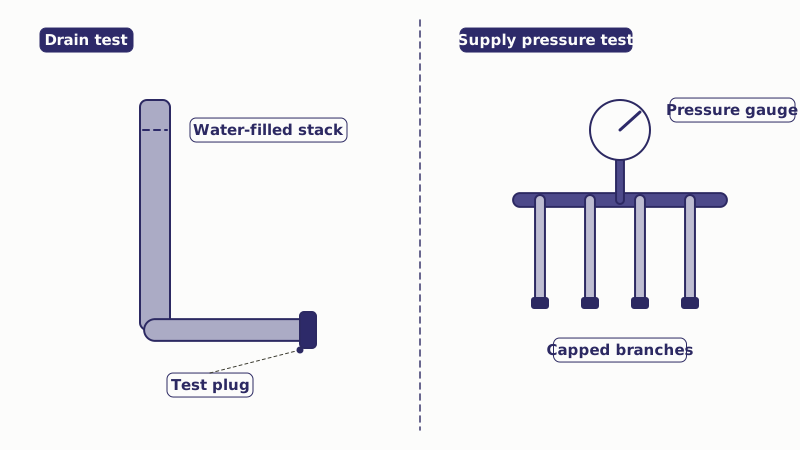
Regular inspections are requested a day ahead, and LADBS lists weekday inspection hours with extra charges after 3:30 PM. A failed inspection means a correction and a re-inspection, which adds days, so a pressure test before the inspector arrives is a good habit.
Owners of single-family homes can apply for permits with an Owner-Builder Declaration. Most new builds are done under a general contractor and a plumbing contractor, and California requires a state contractor license for jobs of $1,000 or more.
How much does new construction plumbing cost?
Published guides put the plumbing for a new house at about $4 to $8 per square foot, with wider ranges up to $10. Average homes of 2,000 to 2,500 square feet often land between $10,000 and $20,000, and large or custom homes higher. These are national guides, and Los Angeles prices can run higher.
Cost per fixture varies in published figures, from a few hundred dollars to over $1,000 for rough-in, with finish work adding more. The finish stage for a 2,000 square foot home is estimated in one guide at $2,000 to $5,000 or more. Treat every figure as a guide, and compare written quotes on the same scope.
What drives the cost:
- Fixture count. More bathrooms, a kitchen island sink, a laundry room and outdoor hookups each add rough-in and finish work.
- Pipe material. PEX, copper and cast iron or ABS drains differ in price and labor.
- Distance. Long runs from the water heater and meter add pipe and time.
- Slab or crawl space. Underground work under a slab is more involved.
- Gas. Range, dryer, water heater and fireplace lines add piping and inspection.
- Fixtures supplied. Who buys the toilets, faucets and water heater changes the quote.
Ask whether the quote is a fixed price for rough-in and finish, or a per-fixture price, and what happens if the plans change.
What should you settle before the walls go up?
Settle the fixture list and locations, the water heater type and place, shutoff valve locations, a pressure regulator if needed, gas appliance locations, cleanouts, hose bibs and any future bath rough-ins. Changes after drywall are costly, and a missing cleanout or valve is a common failure at inspection.
A short list to cover with the plumber and builder:
- Where the main shutoff valve and meter will sit, and who can reach them.
- Whether street pressure calls for a regulator. The California Plumbing Code requires one above 80 psi.
- Water heater type, tank or tankless, and its gas line or electrical needs. See tank versus tankless water heaters for that choice.
- Whether to install an earthquake gas shutoff valve. See earthquake gas shutoff valves.
- Cleanouts at the base of stacks and on the sewer line.
- Capped rough-ins for a future bathroom or laundry.
For an accessory dwelling unit, new plumbing generally needs a permit, and the existing water meter and sewer connection may need review. Ask the city and LADWP about meter capacity early, since it can affect cost and schedule.
If the plans include a bathroom, see our guide to plumbing for a bathroom remodel, and for the whole picture of fees see what a plumber costs.
How do you choose a new construction plumbing company?
Check the contractor license and classification on the CSLB website, ask whether they pull the permit, request a written scope and schedule, and ask for references from similar projects. Compare two or three quotes on the same plan set. Avoid starting without a written contract.
Ask how they handle failed inspections, who coordinates with the general contractor, what warranty they give on workmanship in writing, and how change orders are priced. California limits a down payment on a home improvement contract to the lesser of $1,000 or 10 percent, with exceptions, and the CSLB publishes a guide to what a contract must contain.
Through our quote page, a local plumber contacts you to quote the job, and the written quote names the scope, permit and price before any work starts.
Common questions
How long does new construction plumbing take?
Rough-in for a typical house is described in published guides as a few days, with underground before the slab and finish work at the end, so the plumber is on site in several visits across the build. The total span depends on the construction schedule and the inspection dates. Ask the plumber for a sequence tied to the builder's schedule.
What should I ask before I hire someone for new construction plumbing?
Ask for their California contractor license number and check it with the CSLB, whether they pull permits and handle inspections, what the quote includes at rough-in and finish, who supplies fixtures, and how changes are priced. Ask for a written scope and schedule before any payment, and keep the down payment within the legal limit.
Does someone need to be at the property?
You do not need to be present for the rough-in, but you or your builder should be reachable for decisions on fixture locations, and attend the walk-through at finish. A general contractor usually coordinates the site. If you are building yourself, plan to be at the site for inspections, since access and signatures are needed.
What is the difference between rough-in and finish plumbing?
Rough-in is the pipes, drains and vents installed in the framing before walls close, and it is inspected. Finish is setting the fixtures, such as toilets, sinks, faucets and the water heater, after drywall and tile. Rough-in failures, such as a leak or a missing cleanout, are the most expensive to fix later.
Does new construction plumbing include the water heater?
Sometimes. It depends on whether the plumber's quote includes supplying and installing it, or just connecting one the builder provides. Include the water heater type and location in the scope. It matters for venting, gas or electrical supply, the shutoff valve and the expansion tank, so settle it early.