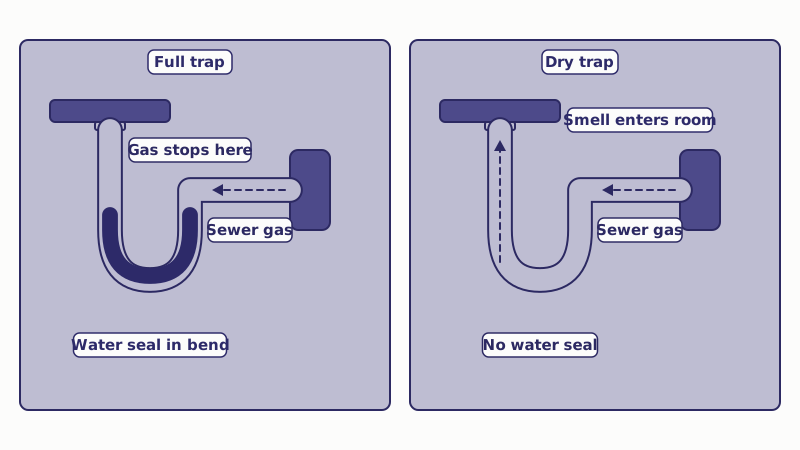
You can usually get rid of a sewer smell in a house by running water down each drain that rarely gets used, then checking the toilets and the vents. If the smell survives that, the problem sits behind a wall or beneath the slab, and a plumber with a camera should handle it. That visit can be arranged through our quote page. For the wider picture of home plumbing, start at the home page.
One safety line first. Natural gas is also given a rotten egg smell. If the odor is strong, you feel dizzy, or you hear hissing, get out of the building and phone SoCalGas on 1-800-427-2200 once you are clear of it. Call 911 if anyone is in danger. Do not flip switches on the way out.
The rest of this page assumes it is the drain kind of smell, the one that comes from the sewer line side of the house and is worst near one fixture.
What is the fastest way to get rid of sewer smell in a house?
Run water for about a minute in every sink, tub, shower and floor drain, including the ones nobody has used for weeks. Every drain contains a U-shaped trap whose standing water blocks sewer gas. When that water evaporates, the gas walks straight in. Refilling the traps fixes the most common cause in minutes.
Do the full circuit, not just the bathroom that smells. Guest baths, laundry sinks, garage floor drains and a basement or utility room drain all dry out. In a Los Angeles house with a spare bathroom nobody uses, this alone solves the smell more often than anything else on this page.
Then pour a cup of water down any floor drain, and a little more into rarely used showers. A tablespoon of cooking oil on top of the water in a floor drain slows evaporation, which is a trick plumbers commonly mention for drains that sit unused, though it is only a stopgap. If the smell is gone by the next morning and stays gone, you found it.
How do you find where the sewer smell is coming from?
Follow your nose room by room with the door closed, and note where it is strongest. A smell that is strongest at one drain points to that drain's trap. A smell at the toilet base points to the seal. A smell across several rooms, or one that follows the walls, points to a vent or the main drain.
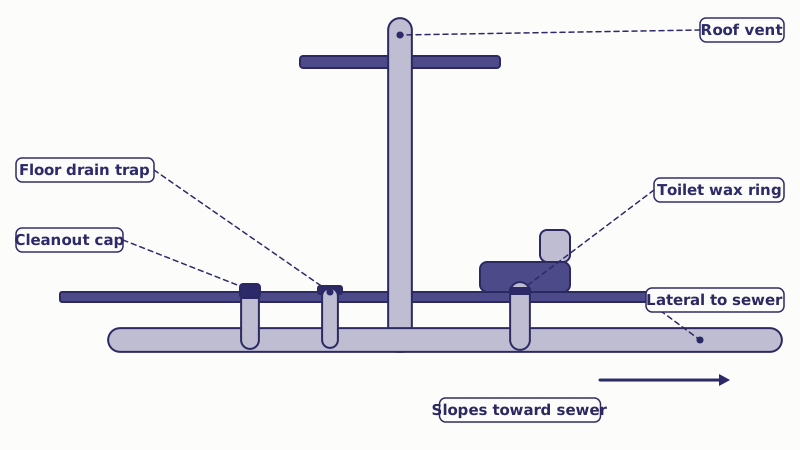
Work through this list in order. Stop when the smell stops.
- Drains. Fill every trap as above. Smell the drain opening itself. If it is only the drain, a build-up of residue inside the pipe can smell too. Our page on shower drain smell covers that case.
- Toilets. A toilet sits on a wax or foam ring against the floor flange. If the ring fails or the toilet rocks, gas escapes around the base. Press on the bowl. Any movement means the toilet needs resetting, which is plumber work.
- Water heater and hot taps. If only the hot water smells like rotten eggs and the cold does not, the cause is the water heater, not the sewer.
- Vents. Listen for gurgling when a tub drains or a toilet flushes. Gurgling suggests the vent that equalizes pressure is blocked, so the water siphons a trap dry.
What causes sewer smell in a house?
Sewer smell in a house comes from sewer gas getting past a trap, a seal or a pipe joint. The usual causes are a dry trap, a failed toilet seal, a blocked or cracked vent pipe, and a cracked or broken drain line. Less often the cause is a collapsed or root-damaged sewer line outside the house.
The gas itself is a mixture formed as waste breaks down. Hydrogen sulfide is the part you smell as rotten eggs. Methane is also present and is flammable, which is why Wikipedia lists fire and explosion hazards as well as health ones.
Here is how each cause tends to show up:
| Cause | How it shows up |
|---|---|
| Dry trap | One fixture, rarely used, smell stops once you run water |
| Toilet seal | Smell around the base, maybe a rocking toilet or a stain on the floor |
| Vent blockage | Gurgling drains, slow flushing, smell in several rooms |
| Cracked drain pipe | Smell in a wall or under a floor, damp patches, sometimes pests |
| Sewer line damage | Several fixtures slow, backups, wet or sunken ground outside |
The California Plumbing Code requires every fixture to have a trap with a water seal, and floor drains that see little use to have a trap seal primer unless the local building authority waives it. If a floor drain in your garage or laundry dries out every month, a primer is the permanent fix, and that is plumber work.
Why does the sewer smell come and go, or get worse in cold weather?
An on-and-off sewer smell usually means a trap seal that is marginal, not a pipe that is fully broken. Changes in air pressure, wind across the roof vent, or a bathroom or range fan pulling air through the house can lift gas past a weak seal for a few hours, then let it settle again.
Cold weather is more often a coincidence of habits than a cause. In winter you close windows, run the heater and use exhaust fans, so the house is tighter and even a minor gas leak is easier to notice. In a mild Los Angeles winter, the cold itself rarely changes the plumbing. Storms matter more than temperature, because they swing air pressure.
Practical test: note the time of day, the weather, and which fans or appliances were on when the smell appeared. Three notes on a phone make a plumber's diagnosis much faster.
Can sewer smell in the house make you sick?
At the low levels in most homes, sewer gas is a nuisance that can cause headaches, nausea or eye irritation, especially with long exposure. At high concentrations hydrogen sulfide is dangerous, and it dulls your sense of smell, so a strong odor that suddenly fades is not a sign the gas is gone.
OSHA says prolonged exposure around 2 to 5 parts per million can cause nausea, watering eyes, headaches or loss of sleep. The CDC's ATSDR notes that people can smell the gas at very low levels, and that above about 100 ppm most people lose the ability to smell it. Those high levels are found in sewers and tanks, not in a living room with a dry trap.
Treat it as a health issue if the smell is strong, if more than one person has symptoms, or if the smell is worse in a closed room. Open windows and leave the room. If you are unsure whether it is sewer gas or natural gas, treat it as natural gas and follow the SoCalGas steps above.
When should you call a plumber for sewer smell?
Call a plumber if refilled traps have not cleared the smell within a day, if it reaches several rooms, if drains gurgle or back up, or if a toilet rocks. Those signs suggest a seal, a vent, or the sewer line, and fixing any of them means opening pipes or running a camera.
A local plumber we arrange for you comes to the house, checks the traps and toilets, and can run a camera through the drain to look for cracks, sags and roots. A written quote arrives before any work begins. In Los Angeles, hourly rates in published price guides run about $95 to $200, plus a service call fee, so ask what the first visit includes.
Know who owns the pipe. LA Sanitation says the city owns the public sewer main, and the owner of the property must look after the private lateral connecting the building to it, out to the main itself. For sewage odor on the street, LA Sanitation lists a round-the-clock customer care number, 1-800-773-2489. For an indoor smell, start with your own plumbing.
When you are ready, use the quote page. For an emergency such as sewage coming up through a floor drain, read about an emergency plumber first. City of Angels Plumbing covers the whole city.
Common questions
Does bleach or baking soda get rid of sewer smell?
Not reliably. They may mask an odor for a short time, but they do not refill a dry trap or seal a leak. Water refills a trap. Bleach can also react badly with other drain cleaners, so never mix products. If water does not fix the smell, the cause is mechanical and needs a look.
How long does it take to get rid of a sewer smell?
A dry trap clears the moment you run water, and the smell fades within hours. A toilet reset or a vent clearing is typically a single visit. A cracked drain or damaged sewer line takes longer because the plumber has to find it first, usually with a camera, then quote the repair.
Is it normal for the house to smell like sewer after a long vacation?
Yes, it is common. Water in unused traps evaporates over a few weeks, and gas rises through the empty drains. Run every drain for a minute when you get home, flush every toilet, and ventilate. If the odor lingers beyond that, have a plumber inspect the vents and seals.
Does someone need to be at the property?
Usually yes, or a person you trust has to provide access to every bathroom, the laundry area and any floor drains. The plumber needs to run water, test toilets and possibly run a camera into a cleanout. Tell the plumber about the smell's timing and where it is strongest.
Can a blocked vent cause sewer smell?
Yes. The vent pipe lets air into the drain system so water drains freely and traps keep their seal. A blocked vent can pull water out of a trap, and a cracked vent can leak gas into a wall or attic. Gurgling drains and slow flushing are the clues.