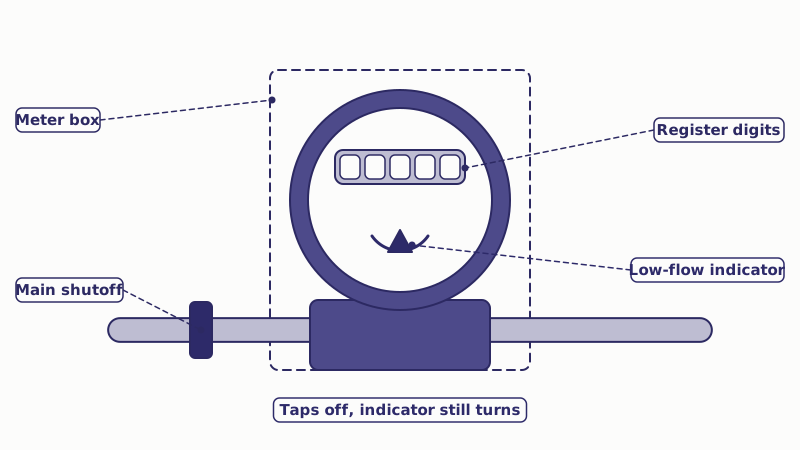
You know a pipe has burst when you see water spraying or pooling, hear running water with every fixture off, find a wet or stained wall, ceiling or floor, or see your water meter move while nothing is on. Low pressure and an unexplained bill spike also give it away. Shut off the main and call a plumber, because the water keeps running until the pipe is fixed. For the wider view of leak work, see our page on a plumber for leaks.
What are the signs of a burst pipe?
Standing water, water running down a wall, a ceiling stain that grows, the sound of rushing water with everything off, and a sudden drop in pressure are the main signs. Damp carpet, a musty smell, warm spots on the floor and a bill that jumps also point to a break you cannot see.
Some signs are loud and some are slow:
- Sound. A hiss, trickle or rush in a quiet house, often loudest near the water heater or where the main enters.
- Sight. Discolored drywall, bubbling paint, a sagging ceiling, wet cabinets, warped flooring.
- Pressure. Weak flow at several faucets at once, or sputtering when you open one.
- Smell. A damp, earthy smell with no visible source can mean water in a cavity.
- Bill. Usage that rises with no change in how you live. Our guide to why a water bill is high walks through the causes.
A burst is not always a dramatic spray. A split in a pipe inside a wall may release water slowly, and the first sign could be a stain on the other side of the wall.
How can you tell if a pipe burst with a meter test?
Turn off every fixture and appliance that uses water, find the meter, and watch the small leak indicator. If it moves, water is escaping on your side. The US EPA suggests reading the meter, waiting two hours with no water use, and reading it again. A change means a probable leak.
To find out which part of the house leaks, close the main valve at the house and check the meter. If it keeps moving, the leak is between the meter and the valve, which is the line outside. If it stops, the leak is inside, and you can close the valves for individual fixtures to narrow it.
Hot or cold? Turn off the cold-water inlet valve at the top of the water heater and watch the meter again. If it stops, the leak is probably on the hot-water side, which is a common find with leaks under a slab.
The meter belongs to the utility, so do not tamper with it. If you cannot close your own main shutoff, LADWP handles water emergency calls at 1-800-342-5397.
How do you tell if a pipe burst under the house?
Under a raised floor, look in the crawl space for dripping, pooling water or wet soil. Under a slab, look for a warm patch on the floor, sounds of water from the floor, a heater that runs constantly or a meter that moves while the house is off. A plumber confirms with listening equipment.
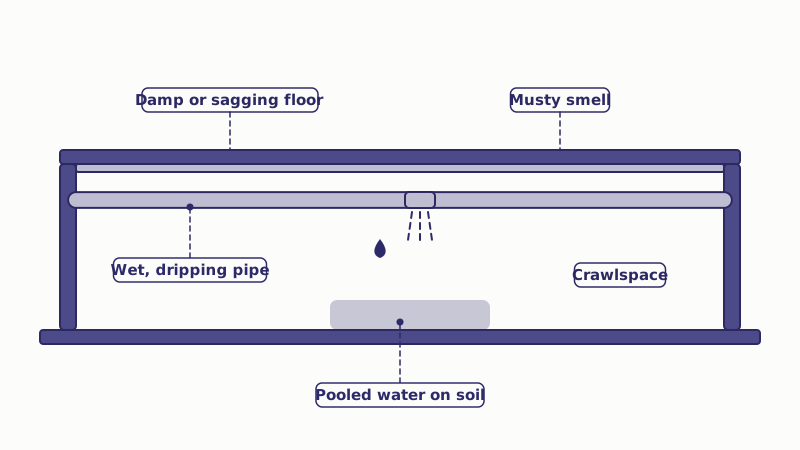
A warm spot on the floor is a strong sign of a hot-water leak, especially together with a water heater that cycles constantly. Other things warm a floor too, so do not assume. Heating ducts, radiant heat and a nearby heater are common reasons.
Plumbers use electronic listening devices, which pick up the sound of water escaping under pressure through concrete, and thermal cameras that show heat patterns. That keeps opening to a minimum. Our guides to slab leak repair cost and leak detection cost show typical Los Angeles prices.
How do you tell if a pipe burst underground or outside?
Look for soggy ground, a bright green patch of lawn in dry weather, a sinkhole, water pooling along the foundation or a driveway edge, or a meter that moves with the house off. A burst between the meter and the house is the owner's responsibility, so call a plumber, and call LADWP if the problem seems to be at the meter or main.
LADWP does not repair leaks on private property, and it handles main breaks. If an underground leak on your property is repaired, you may be eligible for a billing adjustment, so ask LADWP before you finish the repair, and keep the plumber's invoice.
Before anyone digs, call 811 so underground utilities are marked. Hitting a gas line is far more dangerous than the leak. If you smell gas at any point, leave and call SoCalGas at 1-800-427-2200 from outside, or 911 if there is danger.
How can you tell if a pipe burst behind a wall?
Look for stains, bubbling paint, a bulge, soft or damp drywall and a musty smell on a wall that backs onto a bathroom, kitchen or laundry. A moisture meter or thermal camera gives a plumber more certainty. Opening the wall should be a decision made after the area is pinpointed.
A plumber's job here is to find the leak with the least damage. Cutting a small access hole at the right place beats a long trench through drywall. Ask in advance whether the quote includes patching and paint, which are often handled separately.
If a ceiling is sagging with water, keep people out from under it, switch off power to that area if you can do so safely, and call a plumber. See our page on ceiling water leaks for what to do next.
What should you do once you know a pipe burst?
Shut off the water at the main, open a low faucet to drain the line, switch off power to wet areas if you can do it safely, and move belongings. Photograph the damage for your insurer, then call a plumber. Do not try to repair a burst pipe inside a wall yourself.
If the break is small and visible, a repair clamp can stop the water until a plumber replaces the section. Our guides on repairing a copper pipe leak and emergency help for a burst pipe cover temporary fixes and what the plumber does after.
Does homeowners insurance cover a burst pipe? Often it covers sudden damage, such as wet drywall and flooring, but not always the pipe itself or slow leaks. Policies vary, so read yours. Our page on insurance and burst pipes explains the usual pattern.
Common questions
How long does a plumber take to find a burst pipe?
A visible burst is found at once. A hidden one can take from under an hour to a few hours, depending on how the plumber narrows it with meter checks, valve isolation and listening gear. Repair time is separate and depends on where the pipe is. Ask for an arrival window when you book.
What should I ask before I hire someone for a burst pipe?
Ask how they will locate the leak, whether the price includes opening and patching walls, whether a permit applies and what a repair costs if more damage appears. Get the quote in writing. For jobs of $1,000 or more, California requires a contractor license, which you can check on the CSLB website.
Does someone need to be at the property?
Yes, at least when the work begins, to point out what you noticed and give access to the main valve, the meter and the affected rooms. If you cannot be there, name a responsible adult. Tell the plumber about anything you have already shut off or moved so they do not repeat steps.
Can a burst pipe happen without any water showing?
Yes. A split inside a wall, floor or slab can leak into a cavity or the ground with no visible pool. The clues are indirect: a moving meter, running water sounds, damp smells, warm floor spots or a higher bill. That is why the meter test is the first check.
Is a burst pipe the same as a leak?
A leak is any escape of water, from a drip to a spray. A burst usually means a larger failure, a split or break that releases water quickly. The response overlaps: stop the water, protect the property and call a plumber. A pinhole leak may wait a few hours, while a burst should not.