Scale comes off fixtures and glass with a mild acid such as white vinegar or citric acid, a soak, and a soft brush. It does not come off the inside of your pipes, and no cleaner will change that. If your Los Angeles home gets scale again within weeks, the water is the cause, and the lasting fix is treating the water, not scrubbing harder. The water softener installation plumber page explains that route. Below: what dissolves scale, what to leave alone, and when the buildup is a plumbing job.
What removes hard water scale from faucets, showerheads and aerators?
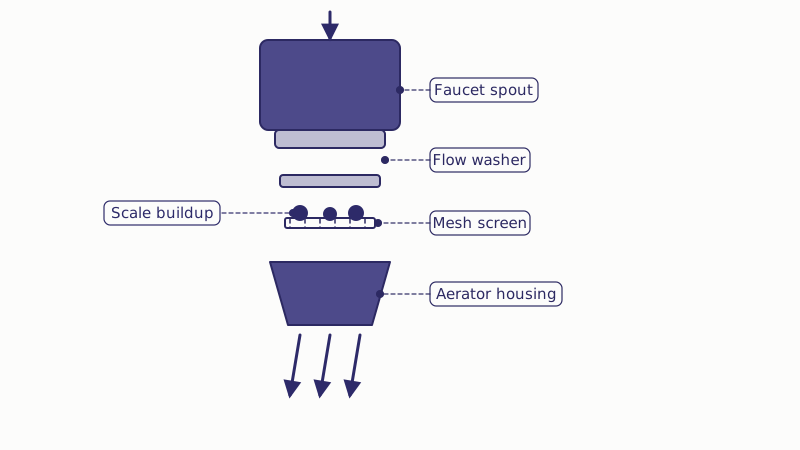
White vinegar or a citric acid solution removes scale from faucets, showerheads and aerators. Scale is mostly calcium carbonate, and mild acids dissolve it. Soak the part in warm vinegar or a few tablespoons of citric acid in a quart of warm water, brush off the softened crust, then rinse well. Follow the fixture maker's instructions first, because some finishes do not tolerate acid.
For a faucet you cannot unscrew, fill a plastic bag with vinegar, tie it around the spout with a rubber band so the aerator sits in the liquid, and leave it. Thirty minutes to an hour clears light buildup. Heavy buildup may need a few hours, but check every so often.
Showerheads are the same job with a bigger payoff. Unscrew the head, soak it, and poke open the nozzle holes with a toothpick or the soft rubber nubs if it has them. The CDC's home water guidance says to take the showerhead and hose off and soak them following the maker's cleaning directions, and to clean faucet aerators the same way.
The finish matters more than the vinegar. Brushed nickel, oil-rubbed bronze and unlacquered brass can etch or dull from long acid contact. Use short soaks, dilute the acid, and never leave these finishes overnight. If the warranty paperwork names an approved cleaner, use that one.
How do you remove hard water scale from glass and shower doors?
Spray or wipe white vinegar onto the glass, let it sit ten to fifteen minutes, and wipe with a microfiber cloth. For stubborn spots, lay a vinegar-soaked paper towel flat against the glass so it stays wet while it works. Rinse and dry afterward so new spots do not form.
Etching is the catch. If the glass stays cloudy after the scale is gone, the minerals have eaten into the surface and no cleaner will bring the clarity back. That cloudiness is damage, not leftover scale. A plain test: wet the glass. If it clears when wet and clouds again when dry, there is still mineral on top. If it stays cloudy when wet, it is etched.
Natural stone is a different case. Marble and travertine shower surfaces react with acid and lose their polish, so vinegar is the wrong tool there. Use a cleaner made for stone and test a hidden corner.
The quickest prevention is a squeegee. Pulling water off the glass after each shower removes the minerals before they dry on. Many Los Angeles households find this does more than any spray.
Can you remove scale from inside pipes?
No. LADWP says there is no practical way to remove scale from the inside of your pipes, and that for severe cases you might consider repiping. It also notes that scale is not a health concern. The practical problem is flow: scale can clog washing machine inlet screens, showerheads and faucet aerators.
That matters most in older Los Angeles houses. Galvanized steel supply lines, common in homes built before copper took over, can narrow from the inside as mineral and rust build up. If water pressure has dropped across the whole house rather than at one fixture, the pipes may be the issue. Read why your water pressure is low for how to tell the difference, and galvanized pipe replacement if your house still has those lines.
Be wary of products that promise to dissolve scale inside plumbing. Strong acid poured into a system can eat pipe walls and fittings that are already thin. If you suspect restricted pipes, the right step is a plumber's assessment, not a stronger chemical.
How do you clear scale from a water heater?
Flushing the tank removes loose sediment, and LADWP recommends flushing your water heater at least once a year to keep mineral deposits from accumulating. Attach a hose to the drain valve, direct it to a safe drain, and run the tank until the water comes out clear. Follow the heater maker's steps, and shut off gas or power as they direct.
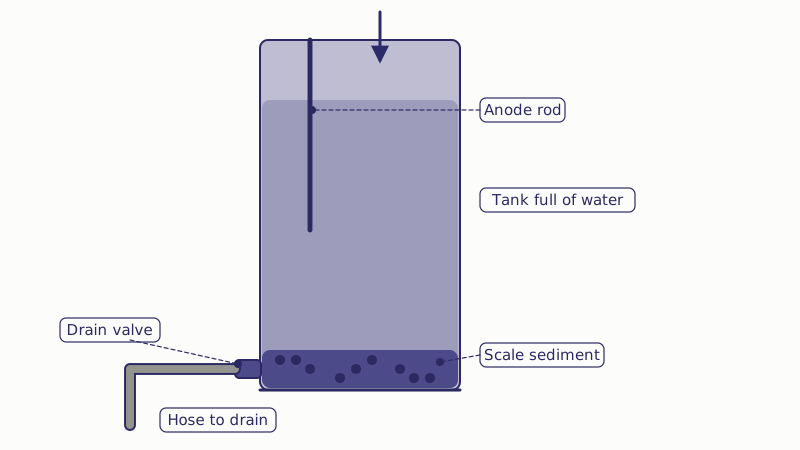
Hard scale that has already cemented to the bottom or the heating element will not flush out. You may hear popping or rumbling as the heater runs. That is water trapped under scale boiling. An old tank with that much buildup often costs more to nurse along than to replace, and the water heater replacement cost page lays out what a swap runs.
Replacing a water heater needs a permit in Los Angeles, and gas work must be done by a person the law allows to do it. See plumbing permits for water heaters before you plan a swap.
How hard is Los Angeles water, and why does scale keep returning?
LADWP supplies water from several sources, so hardness varies by area. Its Water Quality FAQ, using 2022 data, gives averages of 8.6 grains per gallon for the San Fernando Valley and western Los Angeles, 9.8 for Silver Lake, Downtown and South Los Angeles, and 16.3 for eastern Los Angeles and the Harbor. LADWP calls anything over 7 grains hard.
That means most of the city sits in the hard range, and some areas sit well above it. LADWP also notes that most areas can receive water from any source during repairs or emergencies, so your number can shift. Your own service area report is the one to read.
Scale builds faster where water is heated or evaporates. Hot water lines, the water heater, kettles, the dishwasher and the shower glass all collect it first. That is why cleaning is a loop: remove it, and the next batch of water brings more.
How do you stop hard water scale coming back?
You treat the water or you wipe it off. Squeegees, drying glass and a yearly water heater flush slow scale but do not stop it. A softener or a conditioner changes what is in the water. LADWP says even its hardest water does not need to be softened to be safe, so this is a comfort and maintenance choice, not a safety one.
There are two families. A salt-based softener uses ion exchange and swaps calcium and magnesium for sodium, which prevents scale downstream. A salt-free conditioner, often a template-assisted crystallization unit, changes how the minerals behave without removing them, so deposits can still form where water dries. Wikipedia's water softening article describes both.
LADWP lists the downsides of softening: extra sodium with some ion exchange systems, and softened water that is more corrosive to plumbing, which may raise lead and copper levels. It also warns that softening older plumbing can loosen mineral deposits and clog screens. Talk with a plumber about your pipe material before you commit. The full walk-through is in whole-house water softener installation, and costs are on the water softener installation cost page.
When should you call a plumber about scale?
Call when scale is a symptom, not a surface problem. Pressure that fell house-wide, brown or gritty water, a water heater that rumbles, scale-clogged fixtures that return within weeks, or visible crust on supply connections are all worth a visit. A local plumber comes to you, looks at the pipes and the heater, and gives a written quote before work starts. You can request a quote and see how a job runs from first call to finished work.
Budget thinking helps too. A plumber's time is the main cost, so plumber cost is worth a read before you compare quotes.
Common questions
Does vinegar damage faucets?
It can, depending on the finish. Short contact with diluted white vinegar is fine on chrome and most modern plated faucets. Brushed nickel, oil-rubbed bronze and unlacquered brass can dull or etch with long soaks. Check the maker's care instructions, soak for the shortest time that works, rinse thoroughly and never leave acid on overnight.
Is hard water scale dangerous to drink?
LADWP says pipe scale is not a health concern. Wikipedia's hard water article notes that the World Health Organization finds no convincing evidence that hardness harms health. The trouble is practical: clogged aerators, filmy glass, and a water heater that works harder. If you have questions about water and your health, ask a doctor.
Will a water softener remove existing scale?
Not reliably. A softener stops new scale by treating the water, but heavy existing deposits stay where they are. LADWP warns that softening can loosen deposits in older plumbing, which then clog screens. Expect to clean aerators and showerheads in the first weeks after a softener goes in.
How often should I descale a showerhead?
It depends on how fast your area builds scale. In harder parts of Los Angeles, checking every month or two is reasonable, and cleaning when you see spray patterns go uneven. Where the water is closer to medium-hard, a few times a year may do. Clean sooner if the water pressure at the head drops.
Does boiling water or a kettle descaler fix pipe scale?
No. Descalers made for kettles and coffee makers are for those appliances. They will not reach scale inside pipes, and LADWP says there is no practical way to remove it there. For an appliance, follow the maker's descaling instructions rather than improvising.