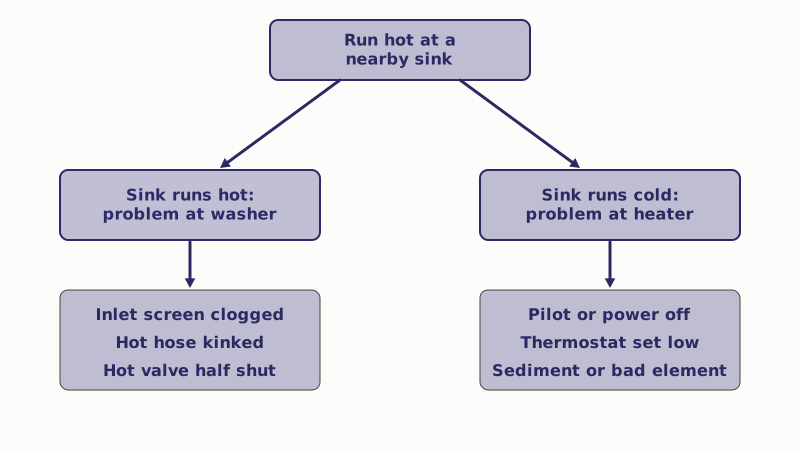
Check the hot tap at a sink first. If hot water runs there and not in the washer, the problem is in the machine or its hose, and an appliance repairer is the right call. If the sink is cold too, the problem is your water heater or the hot line. If the sink is hot and the washer is merely lukewarm, the distance and the heater setting are the likely cause. The steps below sort the three cases out.
Why is my washing machine not getting hot water?
The most common cause is a failed hot inlet valve or a clogged screen in the hot inlet. Each temperature has its own solenoid valve and supply hose, so a missing hot cycle usually points to that side only. Next come a closed or kinked hot tap, reversed hoses, a water heater turned too low, or a heater that has run out.
Hard water makes clogged screens common here. LADWP warns that mineral deposits break loose from heaters and clog washing machine screens, showerheads and faucet aerators. The same grit that blocks an aerator blocks the small mesh screen where the hose meets the washer.
How do I tell if it is the washer or the water heater?
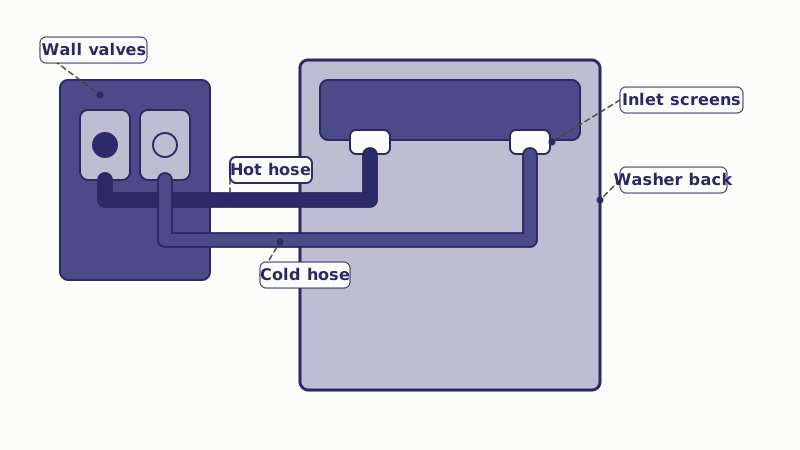
Compare the hot tap at a nearby sink with the washer's hot hose. Run the sink on hot for two minutes and see whether it gets hot. Then pull the washer out and check the hot hose by running it into a bucket. Hot at the hose and cold in the drum puts the fault in the washer.
| Test | Result | Points to |
|---|---|---|
| Hot tap at a sink | Cold | Water heater or hot line |
| Hot hose into a bucket | Hot | Washer inlet valve or board |
| Hot hose into a bucket | Cold or barely flowing | Closed tap, clogged screen, kinked hose |
| Sink hot, hose hot, washer lukewarm | Warm | Heater temperature or a long pipe run |
If the hot comes out of the washer's own tap but never in the drum, the washer is at fault. If hot never reaches the wall, the problem is in the house, and the answer is on our page for no hot water in the house.
What should I check before calling anyone?
Open the hot valve fully, confirm the hoses sit on the right inlets, clean the small screens in the hose ends, check the heater setting and clear cold water from the pipe first. Those five checks fix most cases, need nothing beyond pliers and a bucket, and take about fifteen minutes. In detail:
- Make sure the hot supply valve behind the washer is fully open, and the hose has no kink.
- Check the hoses are on the correct inlets. Most brands put hot on the left. LG's support page says its valves are reversed, with hot on the right and cold on the left, and installers sometimes connect them the wrong way round.
- Turn off both valves, unscrew the hoses and pull the small mesh screens from the valve ports. Rinse off grit and refit them.
- Check the water heater setting. LG recommends about 120 degrees Fahrenheit, and Samsung says the supply should be at least 120 degrees (49 Celsius).
- If the washer sits far from the heater, run a nearby hot tap first so cold water in the pipe clears before the cycle starts.
Check the owner's manual before you decide the machine is faulty. Samsung notes that many front-loading models have only a single cold water supply because they heat water internally, so a missing hot connection is normal on those. Do not use a hose that is cracked or bulging, and replace any hose that shows wear.
What if the dishwasher has no hot water too?
If the dishwasher and the washer both lose hot water, look at the water heater and hot line, not the appliances. A dishwasher usually relies on hot water from the house supply and heats it a little further, and a cold supply can cause poor cleaning or a cycle that stalls. One missing appliance points to that appliance, and two points to the source.
Run the kitchen tap on hot for a minute before starting a cycle if the dishwasher is far from the heater. If the tap itself stays cold, or the water only goes lukewarm, our page on shower with no hot water lists the heater and valve causes that apply anywhere in the house. For gas heaters, repair of gas water heaters explains the pilot, burner and thermocouple checks, with the gas safety rules.
When should I call a plumber for no hot water at the washing machine?
Call a plumber when the hot tap at a sink is also cold or weak, when you find a leak at the washer valves, when the hot hose is hot but barely flowing and cleaning the screen does not help, or when the shutoff valve is corroded and will not turn. Call an appliance repairer when hot water reaches the hose and the drum stays cold.
A plumber can replace a seized washer box valve and test the hot side of the heater. If the heater turns out to be failing, see water heater replacement cost for guide prices. Ask for a visit through the quote page, saying which taps stay cold. Our home page has the wider list of plumbing services.
Common questions
How long does it take to fix a washing machine with no hot water?
A clogged screen or reversed hoses takes about 15 minutes. A new shutoff valve is usually a one-hour job. A failed inlet valve in the machine is an appliance repair and may need a part to be ordered. A failing water heater is a larger job. A plumber can tell you which once they have tested the hot line.
What should I ask before I hire someone about washing machine hot water?
Ask whether they test the hot supply at the wall before blaming the machine, and whether the quote covers valves and hoses. Ask what they will do if the problem proves to be the machine, not the plumbing. Get the scope of work and the price in writing before they start.
Is it safe to turn my water heater up for the washer?
Only a little, and not for long. The Department of Energy points to about 120 degrees Fahrenheit for most homes, and higher settings raise scald risk and hurry scale. If hot water is too weak at the washer, a shorter pipe run, a clean screen or a better heater is a safer answer than a hotter tank. Adults and children in the home need protection from scalds.
Does someone need to be at the property?
Yes, someone should be there to give access to the washer, the valves and the water heater. The plumber may need to pull the machine out and turn the water off. If you rent, tell the landlord, since the supply valves and water heater are usually theirs to maintain.