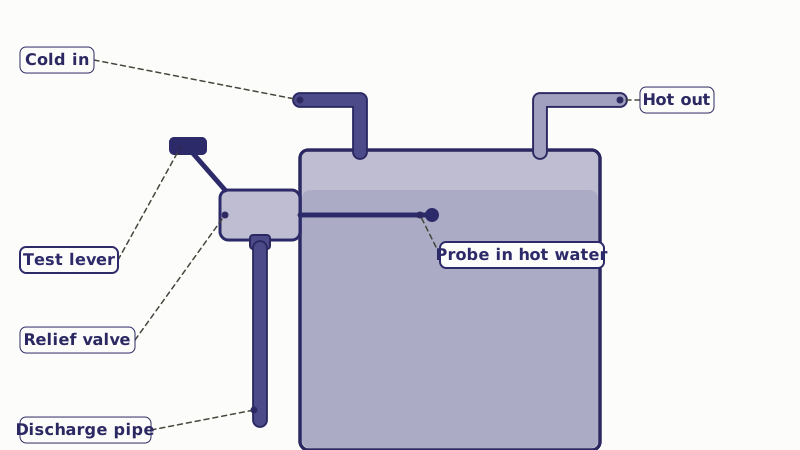
Replace a water heater's relief valve when it leaks after you test it, when it will not release water when you lift the lever, or when it is heavily corroded. Match the new valve to the heater's rating plate, never cap or plug it, and keep its discharge pipe open and running downward. A valve that drips again and again may be telling you that pressure is too high, in which case a new valve alone will not stop it. This page covers testing, replacement, the discharge pipe and the Los Angeles angle. For other heater faults, see the water heater repair and replacement page.
What does the relief valve on a water heater do?
The temperature and pressure relief valve, often called the T&P valve, opens automatically if the tank pressure or water temperature climbs too high, and lets water out through a discharge pipe. It is the last line of defense if a thermostat or burner control fails, so it must never be blocked, capped or removed.
Most residential heaters carry a valve rated at 150 psi that opens at 210 degrees Fahrenheit, though the rating plate on your heater is what counts. The valve sits near the top of the tank, with a small lever on it and a pipe running down the side. The valve exists because a stuck thermostat can keep heating the water past safe limits. A valve that works lets out a burst of hot water when tested and then closes fully. One that does not open, or does not close, needs replacing.
How do you test a water heater relief valve?
Put a bucket under the discharge pipe, lift the test lever for about five seconds, and let it snap shut. Hot water and some air should rush out. If the flow does not stop when the lever closes, or nothing comes out, the valve needs replacing. Plumbers suggest doing this about once a year.
Take care, because the water is hot enough to scald, so keep your hands and face clear of the discharge pipe. If the valve has never been tested and the heater is more than a few years old, it may drip afterward because mineral deposits stop it seating. A valve that keeps dripping after you test it should be replaced. A valve that does nothing when you lift the lever is stuck, and that is the dangerous failure, so it should be replaced promptly.
When should a relief valve be replaced?
Decide based on the test result and its condition. Replace it if it leaks after a test, does not release water, is heavily corroded or crusted with scale, or has been discharging repeatedly. Some guides suggest a change every five to fifteen years, but there is no single rule. Scale can shorten a valve's life, so in Los Angeles it is worth testing yours every year.
LADWP classes water above 7 grains per gallon as hard, and its 2022 averages ran from 8.6 grains in the Valley and West Los Angeles to 16.3 in the east and the harbor area. Scale builds on the valve seat and can stop it seating or opening. If the valve is part of a heater that is old and failing, replacing the whole heater, or moving to a tankless water heater, may be the wiser spend. The plumber for water heater replacement page covers that.
Why is the water heater relief valve dripping?
A dripping valve either has a worn seat or is doing its job because pressure or temperature in the tank is too high. A common cause is thermal expansion: water expands when heated, and in a closed plumbing system it has nowhere to go. An expansion tank or a pressure regulator check can fix that.
Ask for the water pressure and the stored water temperatures to be measured before the valve is swapped. If the supply pressure is high, or the system is closed by a check valve or a pressure regulator, a new valve will start dripping again. The pages on water heater expansion tank replacement and the water pressure regulator explain the two usual fixes. A thermostat set too high can also trip the valve, because hotter water raises the pressure, so check the temperature setting. A valve that is flowing steadily rather than dripping means you should shut off the water to the heater and call a plumber right away.
What must the discharge pipe do?
The discharge pipe must be at least as large as the valve outlet, usually three-quarter inch, made of an approved material such as copper or CPVC rated for hot water, and run downward to a safe, visible point such as a floor drain or outdoors. It must not be capped, plugged, reduced or pointed into a wall.
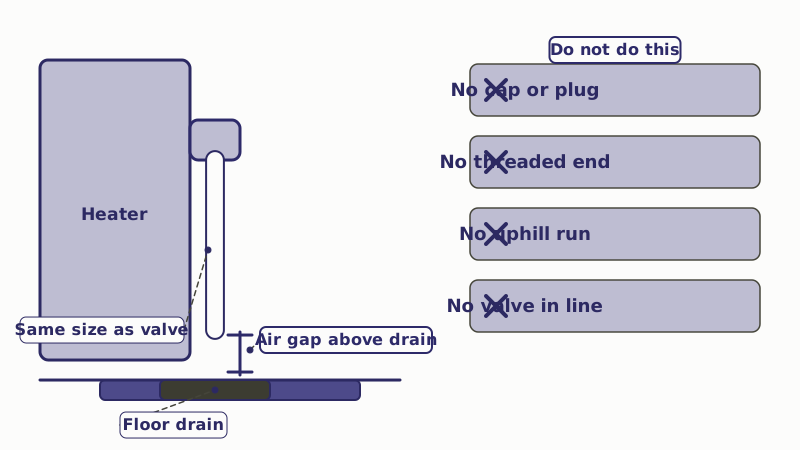
Many guides say the pipe should end within about six inches of the floor or at an approved drain, and that California requires it to end outdoors or at an approved indirect drain. The exact rule comes from the California Plumbing Code and the Los Angeles code, and your plumber and the inspector apply it. Check the pipe yearly for corrosion or mineral buildup. Never thread the end of the pipe or put a cap on it, because a blocked discharge defeats the valve.
How do you replace a water heater relief valve?
Turn off the power or gas and the cold water supply, open a hot tap and drain the tank below the valve, unscrew the old valve and discharge pipe, fit a new valve of the same rating with thread sealant, reconnect the pipe, refill, and check for leaks. Match the pressure rating and the BTU capacity on the heater's plate.
The job is simple in outline, but the tank is under pressure and full of hot water, and getting the rating wrong creates a hazard. A seized valve can twist the tank fittings. Do not use a valve with a lower or higher pressure rating than the heater. If the heater is gas, remember to set the control back as the label directs and relight the pilot only as instructed. If you smell gas, leave the building and call SoCalGas on 1-800-427-2200 from outside.
It is a repair, not a heater replacement, so we would not usually expect a permit. A replacement heater is a different story, because the City of Los Angeles requires a plumbing permit to replace a gas water heater in a single-family home, with a narrow exception for like-for-like swaps by a registered contractor. In earthquake country the heater also has to be strapped under California law, which a plumber will check at the same visit.
When should you call a plumber for relief valve problems?
Call when the valve flows steadily, when it is stuck and will not open, when the discharge pipe is blocked or corroded, when you have replaced a valve and it keeps dripping, or when you are not comfortable working with hot water under pressure. A plumber also checks pressure, expansion and the temperature setting.
We can arrange a local plumber to come to your home, test the valve, check the pressure and give a written quote before any work starts. Use our quote page and tell us what the valve does and the heater's age. If water is also leaking from the heater, see plumber for a water heater leak. The home page shows the other jobs we arrange.
Common questions
How much does a relief valve replacement cost?
The valve itself is a small hardware item, and a plumber charges for the visit and labor on top. Published figures vary, so we do not give one number. If the real problem is pressure or expansion, the quote may also include an expansion tank or a regulator. Ask for parts and labor listed separately in writing.
How often should I test the relief valve?
About once a year. Lift the lever for around five seconds with a bucket or the discharge pipe in place, let it snap shut, and confirm that the flow stops. Test more often if the heater has had trouble, and keep clear of the hot water.
Can I just cap a leaking relief valve?
No. Never cap or plug a relief valve or its discharge pipe. It is a safety device, and blocking it risks a tank failure. If it leaks, the cause must be found and the valve or the pressure fixed. A plumber can do this the same day.
Why does my relief valve leak only when the water is heating?
That points to thermal expansion. As the water heats it expands and pressure rises, and the valve opens briefly to relieve it. An expansion tank, a check of the supply pressure, or a lower temperature setting usually stops it. Replacing the valve alone often does not.
Does someone need to be at the property?
Someone should be there so the plumber can reach the heater and shut off water, and so you can see the discharge pipe and the finished work. Water to the heater is off for part of the visit, and hot water is unavailable until the tank refills.